+86-512-52396378
sales@szuniking.com
sales@szuniking.com
1 Longteng Rd, Tonggang Industrial Park, Changshu ETDZ, Jiangsu Province, China 215511
Views: 0 Author: Site Editor Publish Time: 2026-06-25 Origin: Site


Replacing traditional metals like brass with advanced polymers in potable water applications presents serious engineering challenges. You face dual risks during this transition. Mechanical failures can occur under constant hydrostatic pressure, leading to catastrophic leaks. At the same time, strict regulatory non-compliance can halt your production entirely and trigger costly recalls. Enter the 3130HW formulation. We recognize it as a specialized, engineering-grade resin designed specifically for prolonged water exposure. Standard plastics simply cannot survive these environments.
This guide provides a transparent, engineering-first evaluation framework. It will help you determine if this specific polymer is the correct material for your fluid handling components. You will learn how it performs in critical applications like manifold valves, pump housings, and custom plumbing fittings. We will explore its mechanical viability, strict regulatory compliance profiles, and essential manufacturing considerations required for a successful product launch.
Hydrolysis Resistance is Non-Negotiable: Standard nylons degrade in water; PA66 3130HW is chemically modified to withstand long-term exposure to hot and cold potable water.
Compliance Drives Procurement: Choosing an officially certified NSF PA66 material mitigates legal and health-safety risks in North American and European markets.
Strength-to-Weight Advantage: The glass fiber reinforced PA66 matrix offers comparable burst strength to metals while significantly reducing part weight and manufacturing costs.
Process Predictability: Successful adoption requires strict adherence to moisture conditioning and injection molding parameters to prevent brittle failures.
Component manufacturers face immense pressure today in the plumbing and fluid handling sectors. They must reduce unit costs and cut component weight simultaneously. They also need to meet strict "lead-free" mandates, most notably the Safe Drinking Water Act in the United States. Standard commodity plastics often fail under these demanding conditions. They crack under continuous water pressure. They warp during extreme temperature fluctuations. Engineers need a robust, predictable solution to replace heavy metal alloys.
The material solution lies in advanced polymer chemistry. PA66 3130HW steps in as a highly reliable answer. We classify it as a true hydrolysis resistant PA66. Standard nylon absorbs water quickly. This absorption acts as a plasticizer, dropping the material's glass transition temperature and breaking down the polymer chains. As a result, standard parts lose their structural integrity. This specific stabilized formulation prevents water molecules from attacking the chemical backbone. It extends the component's lifecycle significantly in harsh, continuously wet environments.
Typical applications for this material span across many industrial and residential plumbing sectors. You can evaluate your own project against these ideal use cases. Common applications include:
Residential and commercial water meter housings.
Complex manifold valves for radiant heating systems.
Filtration system end-caps and pressure vessels.
Internal pump impellers and volutes.
These components demand flawless performance to prevent leaks. They require a material capable of holding tight dimensional tolerances over decades of continuous use.
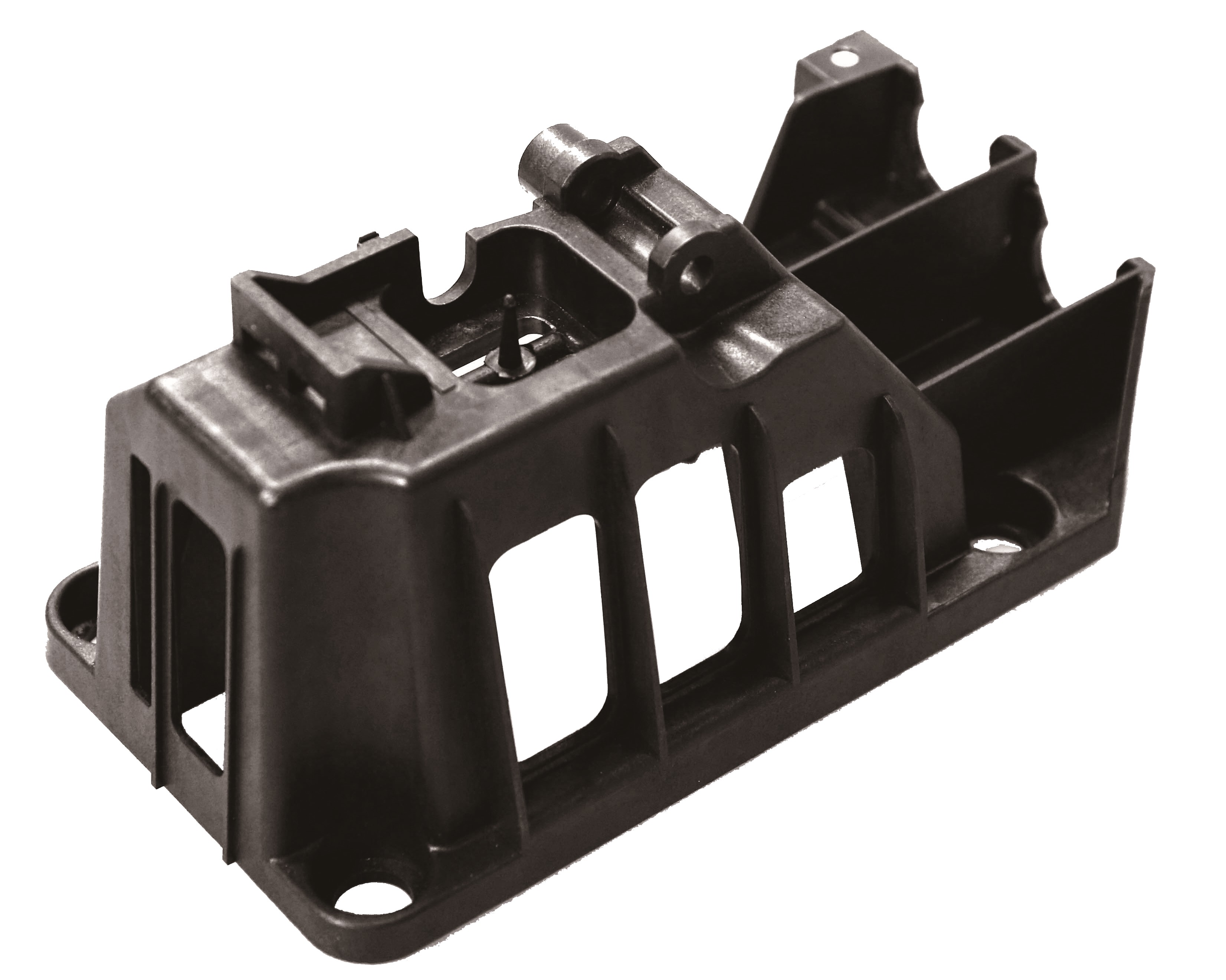
Mechanical performance dictates material selection in fluid handling. You must evaluate tensile strength and creep resistance carefully before approving any polymer. A glass fiber reinforced matrix handles continuous hydrostatic pressure exceptionally well. "Creep" refers to the slow, permanent deformation of a material over time under constant stress. Pressurized water pipes and valves experience this stress continuously. The 3130HW grade minimizes creep risk through its highly crystalline structure and rigid fiberglass reinforcement. It maintains structural rigidity even after years of continuous internal pressure, ensuring elastomer seals do not fail due to housing expansion.
Thermal boundaries define where this material operates safely. You must provide realistic operational limits for your designs to avoid field failures. We differentiate between intermittent exposure and continuous exposure limits. The material easily handles intermittent hot water spikes common in residential plumbing systems. However, continuous exposure to boiling water pushes the polymer near its structural limits. Typical continuous operating temperatures in water hover safely around 85°C (185°F). Short-term spikes can safely reach up to 110°C (230°F) without causing immediate structural degradation.
We must include an evidence-oriented caveat here. Maintain realistic expectations for extreme environments. While highly resistant to standard municipal water, extreme temperature combinations pose distinct risks. Continuous pressurized steam environments exceed standard operational limits for this resin. If your application involves continuous steam sterilization, you may require a step up to higher-end polymers like PPS or PEEK. Always validate thermal boundaries through accelerated aging tests in your specific application environment.
Regulatory compliance acts as a strict gatekeeper in the global plumbing industry. You must navigate NSF/ANSI standards carefully to sell products legally. Engineers must understand the critical difference between NSF 61 and NSF 372. NSF 61 evaluates health effects and chemical leaching. It ensures the plastic does not release harmful toxins or volatile organic compounds into the drinking water. NSF 372 verifies the "Lead-Free" status of the component. Specifying an already-compliant NSF PA66 material accelerates your product's time-to-market. It removes the guesswork from regulatory testing and prevents costly mold redesigns late in the development cycle.
Global potable water certifications open doors to international markets. You must map out equivalent standards for global distribution. Relying on just one certification limits your sales territory. In the United Kingdom, products require WRAS approval. Germany relies on the strict KTW and W270 testing protocols to ensure microbial growth does not occur on the plastic surface. France mandates ACS certification. Selecting a baseline resin that already passes these stringent leaching tests simplifies global product launches immensely.
Furthermore, the material offers excellent food contact suitability. We recognize it as a trusted food contact nylon 66. It meets strict FDA and EU compliance guidelines for direct contact with consumables. This reassures buyers of its high purity matrix. It lacks toxic additives, harmful plasticizers, or heavy metals often found in lower-grade plastics. You can deploy it confidently in beverage dispensers, commercial coffee machines, and automated food processing equipment.
Material selection often comes down to direct side-by-side comparisons. We evaluate alternatives based on structural performance, unit cost, and manufacturing efficiency.
First, consider the comparison against traditional Brass and Bronze. Brass carries a high cost-per-cubic-inch and subject to extreme commodity market volatility. Bronze carries significant lead-leaching risks that regulatory bodies actively target. Polymer alternatives eliminate costly secondary machining operations entirely. You mold the final complex geometry in one step. This reduces unit costs drastically and eliminates heavy metal compliance headaches permanently.
Next, look at standard PA66 and POM (Acetal). Standard nylon degrades rapidly in hot water environments. POM exhibits high sensitivity to chlorine, leading to surface flaking and brittleness. Municipal water supplies rely heavily on chlorine and chloramines for disinfection. The stabilized 3130HW grade solves both structural issues. It resists hot water hydrolysis effectively. It also withstands standard chlorine exposure far better than standard Acetal.
Finally, compare it against higher-end polymers like PPO and PPS. We present a balanced performance analysis here. PPS offers superior chemical resistance to very high chlorine levels and industrial solvents. However, it costs significantly more and requires exceptionally high mold temperatures. PA66 3130HW offers a much better cost-to-performance ratio for standard municipal water systems.
Material | Hydrolysis Resistance | Chlorine Resistance | Relative Unit Cost | Primary Drawback |
|---|---|---|---|---|
Brass | Excellent | Excellent | High | Heavy weight, requires secondary machining |
Standard PA66 | Poor | Moderate | Low | Rapid degradation in hot water applications |
POM (Acetal) | Good | Poor | Medium | Fails in highly chlorinated municipal water |
PPS | Excellent | Excellent | Very High | Expensive material, brittle impact profile |
PA66 3130HW | High | Good | Medium | Requires strict pre-molding drying protocols |
Successful adoption requires robust manufacturing controls on the factory floor. You cannot treat engineered nylons like standard commodity plastics.
Moisture management represents your biggest manufacturing hurdle. Processing nylon demands precise moisture control. Strict drying protocols before injection molding are absolute necessities. You must use desiccant dryers to bring moisture levels below 0.2% before the material enters the barrel. Failing to dry the resin causes severe cosmetic and structural defects. You will see splay marks on the part surface. Microscopic internal voids will form. The mechanical strength of the part will plummet, leading to catastrophic field failures under pressure.
Tooling and wear require upfront capital investment and careful planning. You must address the abrasive nature of glass fibers. They act like sandpaper on soft tool steel during the injection phase. We highly recommend using hardened steel molds for high-volume production. Specifying H13 tool steel or an equivalent hardened alloy prevents premature tool wear. This keeps your dimensions stable over hundreds of thousands of molding cycles, reducing maintenance downtime.
Dimensional stability requires careful engineering foresight. Water absorption post-molding affects final part dimensions. Nylon absorbs water from the environment naturally once it leaves the press. It will swell predictably over its first few weeks in service as it reaches equilibrium. Engineers must account for this expansion during the CAD and tolerance-setting phase.
Follow these best practices during implementation:
Verify desiccant dryer performance and dew points before every production run.
Design molds with slightly oversized cavities to account for predictable post-molding shrinkage and subsequent moisture swelling.
Conduct burst testing on the first article off the tool to verify knit-line strength around holes and internal cores.
Choosing the right drinking water system plastic requires balancing mechanical performance with strict regulatory demands. The final decision matrix points clearly toward this specialized nylon for demanding fluid applications. The ideal buyer profile for PA66 3130HW includes manufacturers who need high burst strength, uncompromising NSF compliance, and reliable hot water resistance. You achieve these engineering goals while maintaining excellent manufacturing cost efficiency compared to metal alloys.
Take actionable next steps to validate this material for your upcoming designs. First, direct your procurement team to request official Material Safety Data Sheets (MSDS) and compliance certificates. Second, review the Technical Data Sheets (TDS) with your lead engineering team to verify tensile and thermal limits. Finally, order sample pellets. You can run these samples through prototype tooling to verify real-world performance under actual hydrostatic pressure conditions.
A: Yes, if exposed to direct sunlight. While highly water-resistant, standard PA66 requires carbon black or UV stabilizers for prolonged outdoor exposure. Without additives, the polymer surface will eventually degrade and lose mechanical strength under continuous ultraviolet radiation.
A: It withstands standard municipal chlorine levels effectively. However, point-of-use systems subjected to concentrated chlorine shock treatments may experience accelerated surface oxidation. Engineers should evaluate peak chlorine concentration levels before finalizing the material specification for aggressive environments.
A: Yes, it bonds well with specific EPDM and silicone grades. It requires careful temperature matching during the two-shot molding process to ensure a watertight hermetic seal. Proper tool design and material compatibility testing are crucial for a successful over-molding application.