+86-512-52396378
sales@szuniking.com
sales@szuniking.com
1 Longteng Rd, Tonggang Industrial Park, Changshu ETDZ, Jiangsu Province, China 215511
Views: 0 Author: Site Editor Publish Time: 2026-07-30 Origin: Site


Selecting the right polymer in automotive manufacturing carries incredibly high stakes. Modern internal combustion engine (ICE) and electric vehicle (EV) platforms operate under extreme stress, meaning thermal degradation or mechanical failure is simply not an option. This guide moves beyond basic datasheets to provide you with a comprehensive engineering and procurement-level framework. We help you qualify the exact polymer grade required for highly specific automotive applications. You will learn how to evaluate crucial thermal milestones, assess rigorous mechanical demands, and balance the dimensional sensitivity of different blends. Polyamide 66 is a notoriously high-performance polymer favored across the industry. However, its well-known dimensional sensitivity to moisture requires precise grade selection and application matching. We will explore how to navigate these engineering challenges effectively to ensure robust part performance.
Base your selection on exact operating environments, prioritizing continuous use temperature (CUT) and chemical exposure over baseline tensile strength.
Assess the necessity of reinforced PA66; glass-fiber additions solve mechanical weaknesses but alter mold shrinkage and component weight.
Weigh nylon 66 material against alternatives like PA6 or PBT when dimensional stability in high-humidity environments is the primary failure risk.
Ensure supplier data includes both dry-as-molded (DAM) and conditioned states to accurately predict real-world assembly tolerances.
Automakers continuously shift away from heavy traditional metals. They transition toward advanced lightweight polymers to aggressively improve fuel efficiency and maximize EV battery range. You must define strict regulatory frameworks and performance thresholds for modern vehicle parts. Selecting reliable automotive plastic materials requires framing the exact business and engineering problem before tooling begins. Parts face incredibly harsh operating environments. They demand specific thermal, chemical, and mechanical evaluations.
Engineers must cleanly distinguish between peak temperature spikes and long-term heat aging. High temperatures degrade standard plastics over time by breaking down polymer chains. You need accurate heat resistant nylon metrics for under-the-hood applications. Evaluate the continuous use temperature (CUT) closely. CUT measures how a material performs after thousands of hours of constant thermal exposure. Peak tolerance merely dictates what a part survives during brief anomalies.
Automotive components constantly interact with harsh, degrading fluids. You must evaluate polymer resistance through several specific lenses:
Motor oils, transmission fluids, and synthetic lubricants causing embrittlement.
Aggressive glycol-based engine coolants triggering chemical hydrolysis.
Corrosive automotive brake fluids breaking down inferior plastics.
Modern EV battery dielectric cooling fluids requiring strict non-conductive stability.
Different vehicle zones demand entirely distinct mechanical profiles. Crash-relevant structural zones require exceptional impact resistance to absorb kinetic energy safely. Engine components need strong creep resistance to maintain clamping force under constant mechanical load. Parts experiencing constant road vibration demand high fatigue strength to prevent micro-cracking over a ten-year vehicle lifespan.
Raw polymers rarely meet every stringent automotive engineering requirement out of the gate. Material suppliers aggressively modify PA66 material to create specialized solution categories. Each specific modification directly impacts your downstream engineering outcomes. You must carefully weigh the performance benefits against inevitable processing trade-offs.
Here are the primary solution categories you will encounter:
Glass-Fiber (GF) Reinforced (e.g., 15% to 50% GF): Adding glass fibers yields drastic structural improvements. It skyrockets baseline tensile strength and drastically elevates the heat deflection temperature (HDT). A 30% GF grade can often replace aluminum. However, major trade-offs exist. You will face increased tooling wear, requiring hardened tool steels. Anisotropic shrinkage causes severe part warpage because the material shrinks differently along the fiber flow direction. You might also encounter rougher surface finishes where glass fibers bloom to the surface.
Flame Retardant (FR) Grades: Electrical and electronic (E&E) components demand incredibly strict safety standards. FR modifications remain absolutely essential here. They help components achieve crucial UL94 V-0 flammability ratings, stopping fires before they spread. The trade-offs include a potential drop in baseline impact strength. FR grades also require much stricter processing windows to prevent degrading the sensitive flame-retardant additives during molding.
Impact-Modified (Toughened) PA66: Unmodified polyamide can become brittle in extreme freezing temperatures. Elastomeric toughening agents solve this inherent flaw. These impact-modified grades deliver superior mechanical performance in harsh cold-weather conditions. They also provide the yielding flexibility required for dynamic snap-fit automotive assemblies.
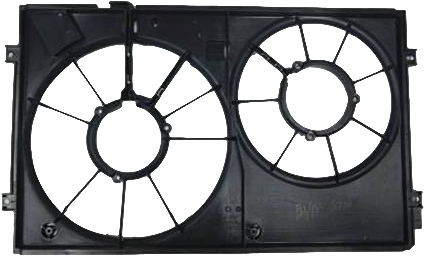
Evaluating material alternatives prevents costly over-engineering. You must use industry-standard engineering lenses to justify your selection mathematically. Sometimes you stick firmly with polyamide 66. Other times, you pivot to PA6 or PBT based on precise functional requirements.
These two polyamides share many chemical traits but behave quite differently in production environments. The 66 variant offers a much higher crystalline melting point. It melts at approximately 260°C compared to 220°C for PA6. It also features substantially faster crystallization rates. This translates directly to shorter cycle times during high-volume manufacturing. However, PA6 may be preferred for visible interior parts. It consistently delivers a superior surface finish. It also carries a slightly lower cost per kilogram if extreme thermal resistance is not a driving factor.
Electrical sensor housings require highly precise evaluation. You must compare dielectric strength and physical dimensional stability closely. We make an objective claim here: PBT absorbs significantly less moisture than polyamides. This characteristic makes it safer for high-precision, low-tolerance sensor housings. Atmospheric moisture will not warp or swell PBT components. Conversely, polyamide 66 strongly wins on mechanical toughness. It also maintains much higher continuous heat resistance, preventing thermal sag near the engine block.
Material Property Comparison Chart
Engineering Feature | Polyamide 66 | Polyamide 6 | PBT (Polybutylene Terephthalate) |
|---|---|---|---|
Crystalline Melting Point | ~260°C | ~220°C | ~225°C |
Moisture Absorption Rate | High | Highest | Extremely Low |
Mechanical Toughness & Impact | Excellent | Good | Moderate |
Surface Finish Quality | Moderate | Excellent | Good |
Primary Automotive Application | Engine mounts, heat-stressed zones | Interior trims, aesthetic covers | Precision electrical housings, sensors |
Different vehicle architectures present entirely different catastrophic failure risks. You must map physical material properties directly to specific component requirements. Generic datasheets fail to capture component-level stress.
Engine mounts and intake manifolds survive in brutal, enclosed environments. You must focus intensely on thermal-oxidative stability here. Glycol and coolant resistance is equally important for manifolds. High-glass-filled, specifically heat-stabilized polyamide is the absolute standard for these applications. It aggressively resists structural creep under high temperatures while handling constant, violent engine vibration.
Relay boxes and modern high-voltage EV connectors require strict electrical oversight. You must focus on high tracking resistance. A high Comparative Tracking Index (CTI) physically prevents electrical shorts across the polymer surface. Strict flame retardancy remains non-negotiable. Furthermore, these connectors must survive immense road vibration without losing critical electrical pin contact.
Passenger cabin interiors demand a completely different engineering focus. You must prioritize low-VOC (volatile organic compound) emissions to meet OEM passenger safety standards. Odor tests are exceptionally strict here. Structural interior brackets need specific crash-safety impact profiles. Long-term fatigue resistance ensures these interior parts do not crack, squeak, or rattle over a decade of daily use.
Theoretical mechanical properties mean absolutely nothing if you cannot manufacture the part reliably. You must transparently address physical implementation realities.
Design engineers must understand the hydrophilic nature of nylon 66 material. It naturally and continuously absorbs atmospheric water from the environment. This absorbed water acts as a chemical plasticizer. It significantly increases part toughness but unavoidably alters physical dimensions. You cannot design steel molds based solely on the Dry-As-Molded (DAM) state. Engineers must meticulously design tooling based on the fully conditioned state to ensure proper final assembly.
Injection molding introduces distinct physical risks. Warpage remains a major threat in heavily glass-filled grades. The rigid glass fibers restrict polymer shrinkage along the flow direction. This creates uneven, aggressive internal stress upon cooling. You must utilize proper mold venting to prevent trapped gas from causing diesel burns. Precise thermal temperature control during injection molding is mandatory to ensure uniform crystallization.
Consistent material availability dictates your production survival. The global chemical market often faces adiponitrile (ADN) shortages. ADN serves as the crucial chemical precursor for these specific polyamides. You must proactively address this market volatility early in the design phase. Smart procurement teams qualify multiple equivalent material grades during the initial prototyping phase. This redundancy strategy secures high-volume production timelines against sudden raw material bottlenecks.
Selecting the perfect polymer grade requires a highly methodical, evidence-based approach. First, you must clearly define the strict thermal and chemical limits of the application. Next, assess the necessary dimensional tolerance regarding potential moisture absorption. Then, intelligently select the appropriate reinforced PA66 or chemical modification to meet exact mechanical needs. Finally, physically validate the processing parameters to ensure seamless manufacturing feasibility.
Do not rely on baseline assumptions or outdated material cards. We strongly encourage engineers to actively request comprehensive material datasheets (TDS/MSDS). You should specifically demand automotive OEM compliance certificates from your suppliers. Always obtain physical material samples for rigorous prototyping, conditioning tests, and real-world assembly validation.
A: Standard grades handle continuous use temperatures around 85°C to 105°C. However, specialized heat-stabilized grades push these limits significantly higher. They can operate continuously at 150°C to 175°C. They easily survive short-term peak temperature spikes exceeding 200°C. Engineers use copper-based or organic stabilizers to prevent thermal-oxidative degradation during long-term heat aging in engine bays.
A: Moisture acts as a plasticizer. It increases the material's impact toughness but causes volumetric swelling. This swelling alters precise physical dimensions, potentially jeopardizing tight assembly tolerances. Furthermore, absorbed water slightly decreases the material's dielectric strength. Manufacturers often condition parts pre-assembly to reach an equilibrium moisture level. This ensures predictable dimensions before the connectors enter the final vehicle assembly line.
A: The primary driver is extreme weight reduction without sacrificing structural integrity. A 30% glass-filled grade offers an exceptional weight-to-strength ratio. It also provides superior noise, vibration, and harshness (NVH) dampening compared to rigid aluminum. Additionally, injection molding allows for complex geometry consolidation. This drastically reduces secondary machining steps, leading to a much lower cost-per-part.
A: Yes, but you must select specific hydrolysis-resistant grades. Standard polyamides degrade when exposed to hot water and aggressive glycol mixtures over long periods. Hydrolysis-resistant variants are chemically modified to withstand modern glycol-based EV coolants. They maintain their mechanical strength and resist chemical breakdown. This makes them highly effective for EV thermal management components and cooling fluid manifolds.