+86-512-52396378
sales@szuniking.com
sales@szuniking.com
1 Longteng Rd, Tonggang Industrial Park, Changshu ETDZ, Jiangsu Province, China 215511
Views: 0 Author: Site Editor Publish Time: 2026-08-07 Origin: Site


Engineering and procurement teams constantly face severe friction between reducing component weight and maintaining absolute structural integrity. Striking this crucial balance directly dictates product success in highly competitive modern markets. Unfilled polymers frequently fail under heavy mechanical loads or elevated temperatures out in the field. Conversely, relying heavily on traditional machined metals inevitably drives up both manufacturing complexity and overall assembly weight.
Glass fiber reinforced nylon bridges this persistent gap perfectly. It offers a highly tunable, structural alternative tailored for rigorous functional parts. This article provides a deeply objective evaluation of its distinct mechanical advantages, complex production realities, and exact selection criteria. You will discover exactly how to evaluate physical properties. We will explore whether it remains the strictly correct material choice for your specific functional application.
Strength-to-Weight Ratio: Adding glass fibers (typically 10% to 40% by weight) significantly increases tensile strength and stiffness compared to base polyamides.
Thermal Performance: Functions as a reliable heat resistance plastic, substantially raising the Heat Deflection Temperature (HDT) for demanding environments.
Manufacturing Agnostic: Viable for both industrial 3D printing (SLS/FDM) and traditional injection molding, enabling seamless transitions from prototyping to mass production.
Implementation Trade-Offs: Requires hardened tooling due to the abrasive nature of glass fibers and demands strict moisture management prior to processing.
Manufacturers across global industries heavily prioritize lightweighting. Reducing overall assembly weight significantly lowers transit energy demands. It also boosts vehicle fuel efficiency and simplifies manual handling. However, you cannot realistically sacrifice part durability just to drop a few grams. Components must survive harsh environments, severe vibrations, and constant friction. Traditional plastics simply buckle or snap under such intense operational demands.
This composite severely alters the physical nature of standard polyamides like PA6, PA12, and PA66. As a proven reinforced engineering plastic, it completely transforms soft base resins. The material shifts from a flexible, general-use plastic into a rigidly structural, load-bearing material. The microscopic glass strands physically bind the polymer matrix together. This creates an incredibly dense internal scaffolding. Engineers rely on this unique internal geometry to solve complex mechanical challenges.
You must evaluate your current manufacturing baseline. Consider replacing traditional aluminum or heavy zinc die-cast components. Executing this material switch yields massive mechanical gains. You can reliably reduce part weight by 40% to 60%. Furthermore, molded composite parts completely eliminate costly secondary machining operations. You achieve highly complex geometries in a single efficient manufacturing step. Teams eliminate post-process drilling, tapping, and surface finishing entirely.
Always assess the exact directional load paths before specifying filler percentages.
Start evaluations using a standard 15% fill rate before jumping to stiffer 30% variants.
Account for slightly thicker wall dimensions compared to standard metal castings.
Review all adjoining mating parts to ensure compatible thermal expansion rates.
You need highly predictable material behaviors operating in aggressive environments. Standard polymers soften, bend, or crack unpredictably. The introduction of glass reinforcement completely stabilizes these physical responses. Every percentage increase in glass content alters the final mechanical profile. We will examine exactly how these microscopic features deliver macro-level structural outcomes.
Adding glass fibers drastically enhances ultimate tensile strength and overall rigidity. The microscopic glass strands physically restrict polymer chain movement. They lock the molecular structure firmly in place. The polymer molecules cannot easily slide past one another. This restriction mechanism directly yields a highly capable high strength polymer. It comfortably sustains severe static loads without bending or yielding under pressure. You completely avoid sudden catastrophic structural yielding. Engineers regularly specify this material for heavy load-bearing brackets and structural chassis components.
Thermal stability sees a massive structural upgrade. Unfilled polyamides often warp when exposed to moderate ambient heat. The rigid composite sharply reduces the material's coefficient of thermal expansion (CTE). It restricts the natural tendency of plastic to swell. Therefore, it functions flawlessly as a robust heat resistance plastic. You maintain strict dimensional accuracy inside tightly constrained spaces. The Heat Deflection Temperature (HDT) rises dramatically. This proves absolutely crucial under vehicle hoods. It also protects delicate circuits inside heat-generating electrical enclosures.
You must closely consider long-term creep resistance. Continuous mechanical stress causes many standard plastics to deform permanently over time. They slowly stretch or compress until failure occurs. The glass reinforcement minimizes this long-term material deformation. The rigid fibers bear the sustained mechanical load instead of the weaker plastic matrix. Therefore, the composite serves perfectly for continuous-load applications. You can confidently design robust fastening components, heavily torqued brackets, and pressurized structural housing.
Performance Metric | Unfilled Polyamide 6 | 30% Glass-Filled Polyamide 6 | Die-Cast Aluminum (A380) |
|---|---|---|---|
Specific Gravity (Density) | 1.14 | 1.35 | 2.76 |
Tensile Strength (Yield) | 80 MPa | 180 MPa | 330 MPa |
Heat Deflection (at 1.8 MPa) | 65 °C | 210 °C | Over 400 °C |
RF Signal Transparency | High (Insulator) | High (Insulator) | Zero (Conductive Shield) |
Choosing between glass and carbon reinforcements fundamentally dictates your project's trajectory. Both additives significantly stiffen the base polymer. However, they perform entirely differently under physical stress. They also carry vastly different procurement realities. You must align the specific reinforcement type perfectly against your product requirements.
Assess the financial cost-to-performance ratio carefully. Glass reinforcement proves significantly more cost-effective than highly specialized carbon fiber alternatives. It reliably provides the best overall return on investment for standard industrial projects. Choose glass for applications needing immense stiffness and dimensional stability. Avoid it only if you require absolute maximum lightweighting at extreme financial premiums. Carbon fiber commands a much higher raw material price. It should remain reserved for hyper-specialized aerospace or high-end sporting goods.
Examine physical impact resistance versus inherent material brittleness. Carbon fiber provides exceptional, unyielding stiffness. However, it also becomes dangerously brittle under sudden, sharp physical shocks. A carbon-filled part often shatters upon severe impact. Conversely, GF nylon offers a far more balanced yield point. It uniquely allows for critical slight impact absorption right before a total structural failure occurs. This vital physical buffer saves functional parts during accidental drops or unexpected operational vibrations.
You must also carefully evaluate radio frequency (RF) transparency. Modern devices increasingly rely on wireless connectivity. Carbon fiber remains a highly conductive material. It aggressively blocks incoming and outgoing wireless signals. It effectively acts as a rigid Faraday cage. Conversely, glass fiber acts as a strong, reliable electrical insulator. It remains entirely transparent to complex RF waves and cellular signals. Thus, it is the mandatory choice for globally connected devices. Use it exclusively for smart IoT enclosures, radar radomes, and wireless electronic housing assemblies.
Transitioning from standard plastics to heavily reinforced materials introduces very distinct production risks. You cannot simply drop these stiff pellets into standard injection molding machines. The physical behavior of the melt changes dramatically. Engineering teams must rigorously prepare the manufacturing floor. Ignoring these physical realities leads to massive defect rates and ruined machinery.
Tooling and equipment wear stand out immediately as the primary risk. Glass fibers act as highly abrasive agents during the high-pressure melt phase. They literally scrub the inside of steel barrels and mold cavities. Standard aluminum tooling will degrade completely within a few hundred cycles. Injection molding strictly requires hardened tool-steel molds to survive extended production runs. We heavily recommend specialized titanium nitride coatings for sensitive mold gates. For industrial FDM 3D printing, you must actively install ruby or hardened steel nozzles. Standard brass printer nozzles will permanently degrade rapidly within mere hours of continuous extrusion.
You must actively manage anisotropic properties and persistent warpage risks. The stiff internal fibers naturally align perfectly following the initial melt flow. They align linearly during high-pressure injection or rapid extrusion printing. This creates incredible directional strength directly along specific load paths. However, it simultaneously increases the severe risk of highly uneven part shrinkage. The part shrinks differently across its width versus its length. To actively mitigate severe warping, engineers require highly advanced gate designs in molding. You must properly balance the mold fill. In additive manufacturing, strictly controlled ambient cooling environments remain an absolute necessity.
Finally, you must address the material's inherent hygroscopic vulnerability. Like all polyamides, this matrix actively absorbs ambient atmospheric moisture. The molecular amide groups readily bond to free water molecules. Water intake directly degrades structural mechanical properties over time. It severely ruins tight dimensional stability, causing parts to swell microscopically. It also drastically lowers the final tensile yield strength. Therefore, implement mandatory material drying protocols. You must thoroughly dry all raw pellets or printing filaments prior to high-heat processing. We recommend drying at 80°C for at least four hours. Consider applying specialized moisture-barrier coatings post-production. These sealants protect submerged parts or those permanently entering high-humidity use cases.
Skipping the mandatory pre-drying phase, causing severe part bubbling.
Using overly narrow mold gates, which snap the glass fibers prematurely.
Cooling the injection mold too rapidly, locking in extreme internal stresses.
Failing to account for the highly anisotropic shrinkage rates during initial CAD design.
Real-world industrial adoption heavily proves the material's immense functional value. Engineers across diverse sectors trust it for highly critical components. It routinely replaces heavy die-cast metal brackets and brittle unreinforced plastics alike. Examining these successful deployments reveals exactly where the material naturally excels.
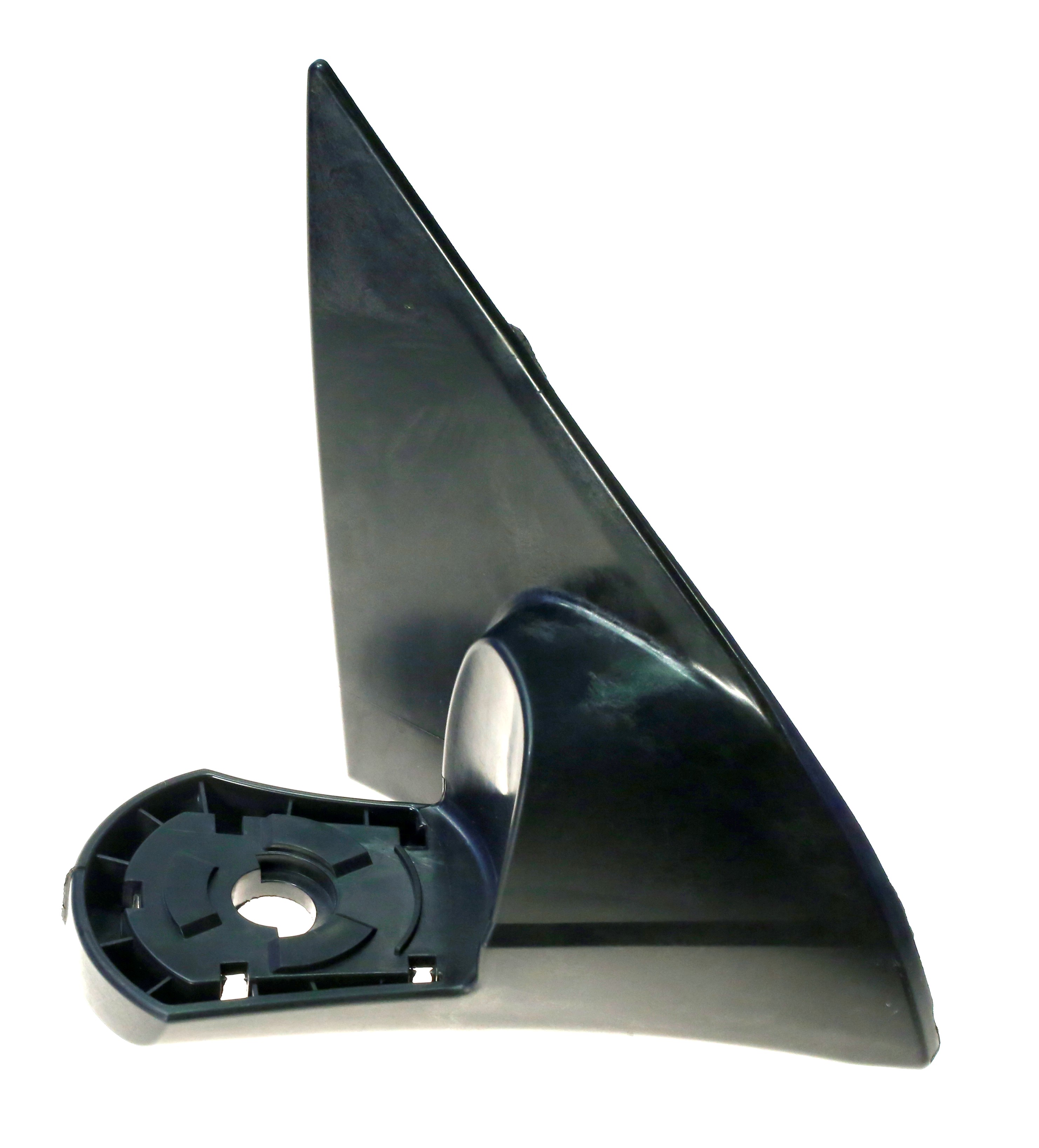
In the demanding automotive and aerospace sectors, mechanical engineers deploy it heavily. They manufacture highly durable air intake manifolds and rugged engine covers. The material easily survives the blistering heat and harsh chemical fumes under the hood. They also design highly complex, lightweight structural brackets. These brackets secure heavy internal wiring harnesses and fluid reservoirs securely to the main chassis.
Heavy industrial sectors also rely strictly on its unique durability profile. Manufacturers produce heavy-duty threaded fastening components and interlocking drive gears. They mold highly aggressive chemical pump impellers. The composite shines brightly where metal-on-metal wear remains a serious operational concern. The plastic matrix provides natural lubricity, while the rigid glass handles the extreme mechanical torque.
Follow strict, standardized shortlisting logic before writing your final engineering specification. Ask your design team these highly specific questions during the prototyping phase:
Does the finished part experience sustained, heavy static mechanical loads over time?
Will the standard operating temperature severely exceed standard ABS or unfilled nylon limits?
Is project budget a restrictive factor actively preventing highly expensive carbon fiber specifications?
Does the internal electronics package require unhindered wireless signal transmission?
If you answered yes to all questions, this composite is your absolute optimal candidate.
Glass fiber reinforced nylon is not a universal manufacturing solution. Instead, it serves as a highly targeted, rigidly engineered material. It perfectly bridges the vast structural gap between standard flexible plastics and much heavier machined metals. You gain massive tensile strength, exceptional thermal resistance, and critical radio frequency transparency. However, you must carefully respect its highly abrasive nature and complex shrinkage patterns.
Assess your very specific static load and environmental requirements closely. We strongly recommend consulting directly with a seasoned injection molding or additive manufacturing partner. Review your exact part geometry carefully for any severe fiber alignment constraints. Request detailed material data sheets from your supplier immediately. Compare the mechanical differences between 15% versus 30% glass-fill options for your upcoming structural project.
A: The percentage indicates the exact weight ratio of glass to plastic matrix. A 30% blend offers significantly higher tensile strength, extreme rigidity, and better heat resistance. However, it noticeably increases part brittleness, overall weight, and severe tooling wear compared to a more flexible 15% blend.
A: Yes, but it explicitly requires specialized carbide or diamond-tipped tooling. The internal glass fibers are incredibly abrasive and will destroy standard steel bits. Additionally, operators must carefully manage liquid coolant applications to prevent the hygroscopic nylon from absorbing excess moisture during CNC machining.
A: Yes. The base polyamide resin remains inherently hygroscopic. While the rigid glass fibers themselves do not absorb any water, the overall molded part will still experience slight dimensional swelling. You will also notice temporary toughness variations and reduced stiffness when deployed in highly humid environments.