+86-512-52396378
sales@szuniking.com
sales@szuniking.com
1 Longteng Rd, Tonggang Industrial Park, Changshu ETDZ, Jiangsu Province, China 215511
Views: 0 Author: Site Editor Publish Time: 2026-06-30 Origin: Site


The transition to 800V+ electric vehicle architectures introduces unprecedented thermal and electrical stress on interconnect systems. These extreme voltage parameters quickly render legacy plastics inadequate for modern automotive demands. Engineers face a critical turning point in material selection to prevent catastrophic system failures. OEMs and Tier 1 suppliers require robust materials balancing severe safety compliance, such as UL 94 standards, against strict environmental mandates like RoHS and REACH. High-voltage environments demand uncompromising material integrity. You need a reliable solution bridging this gap effectively. We introduce halogen-free flame retardant PA66 as the baseline engineering polymer for next-generation automotive safety. You will discover how this advanced compound perfectly balances mechanical rigidity against exceptional high dielectric performance. This comprehensive guide explores core evaluation dimensions, mechanical performance comparisons, and practical processing realities. You will learn exactly how to validate these polymers for your most demanding electric vehicle applications.
Halogen-free flame retardant PA66 delivers UL 94 V-0 performance without relying on environmentally restricted chemicals.
Achieving a Comparative Tracking Index (CTI) of 600V+ is critical for preventing electrical tracking in high-voltage environments.
Glass fiber reinforced PA66 balances the mechanical demands of mating cycles with long-term dimensional stability.
Material selection must account for PA66 moisture absorption, requiring pre-validation of electrical properties in conditioned states.
Modern electric vehicles rely on increasingly powerful electrical architectures. The jump from 400V to 800V+ systems changes the fundamental rules of component design. Higher voltage systems exponentially increase the risk of electrical arcing. They also elevate the danger of short circuits and thermal runaway inside EV infrastructure. When engineers pack more power into smaller connector footprints, traditional plastics fail. They cannot withstand the continuous thermal loads generated by rapid charging.
Electrical tracking poses a severe threat to vehicle integrity. We define electrical tracking as the formation of conductive pathways across the surface of a solid insulating material. Contaminants like road salt, dust, and moisture accumulate on connector housings. These elements create micro-currents across the polymer surface. Over time, these micro-currents carbonize the plastic. This carbonization creates a permanent conductive path. A catastrophic short circuit becomes inevitable once this path fully forms across the insulator.
Automotive manufacturers are actively driving a massive halogen phase-out. Traditional brominated and chlorinated flame retardants generate highly toxic, corrosive smoke during combustion. This smoke poses lethal risks to vehicle occupants during a fire event. It also damages sensitive adjacent electronics. Furthermore, strict global directives now mandate end-of-life recycling for automotive components. Halogenated plastics fail these recycling criteria. They introduce toxic byproducts into the recycling stream.
Material failures carry massive business consequences. Specifying the wrong high voltage connector material leads directly to catastrophic warranty claims. Widespread vehicle recalls destroy brand reputation instantly. Furthermore, component suppliers risk failing stringent OEM validation protocols. Engineers must view material selection as a critical risk management strategy, not just a procurement exercise.
Engineers must evaluate specialized polymers across strict performance dimensions. You cannot compromise on any single metric when designing interconnects for 800V platforms.
Flammability ratings represent the first hurdle in material qualification. The industry demands true PA66 V0 material performance under the rigorous UL 94 standard. EV connectors require this V-0 rating at minimal wall thicknesses, often down to 0.8mm or even 0.4mm. Reaching V-0 at 0.4mm proves incredibly difficult. The material must extinguish itself within 10 seconds without dropping flaming particles.
Comparative Tracking Index (CTI) dictates high-voltage isolation safety. The industry categorizes CTI using Performance Level Categories (PLC). A CTI rating of 600V or higher equals PLC 0. This PLC 0 rating stands as the non-negotiable baseline for EV architectures. It guarantees the plastic will resist carbonization even under severe voltage stress and contamination.
Dielectric strength determines how well a polymer resists electrical breakdown. Specifying premium electrical insulation nylon prevents voltage from punching through the material walls. High-voltage systems experience sudden electrical spikes during rapid acceleration or fast charging. The polymer must maintain its insulating barrier under continuous loads and aggressive transients.
Thermal Aging dictates the long-term viability of the connector. Engineers rely on the Relative Thermal Index (RTI). RTI measures how a polymer retains its electrical and mechanical integrity over prolonged heat exposure. EV platforms demand a 15+ year vehicle lifespan. The material must survive constant thermal cycling between extreme cold and peak operational temperatures.
Evaluation Dimension | Industry Standard | Target Requirement | Engineering Importance |
|---|---|---|---|
Flammability | UL 94 | V-0 @ 0.4mm - 0.8mm | Prevents fire propagation in tight geometries. |
Electrical Tracking | IEC 60112 | CTI 600V (PLC 0) | Stops conductive path formation under 800V loads. |
Dielectric Strength | ASTM D149 | > 25 kV/mm | Insulates against sudden high-voltage spikes. |
Thermal Aging | UL 746B (RTI) | 130°C - 150°C | Guarantees 15+ year vehicle lifespan stability. |
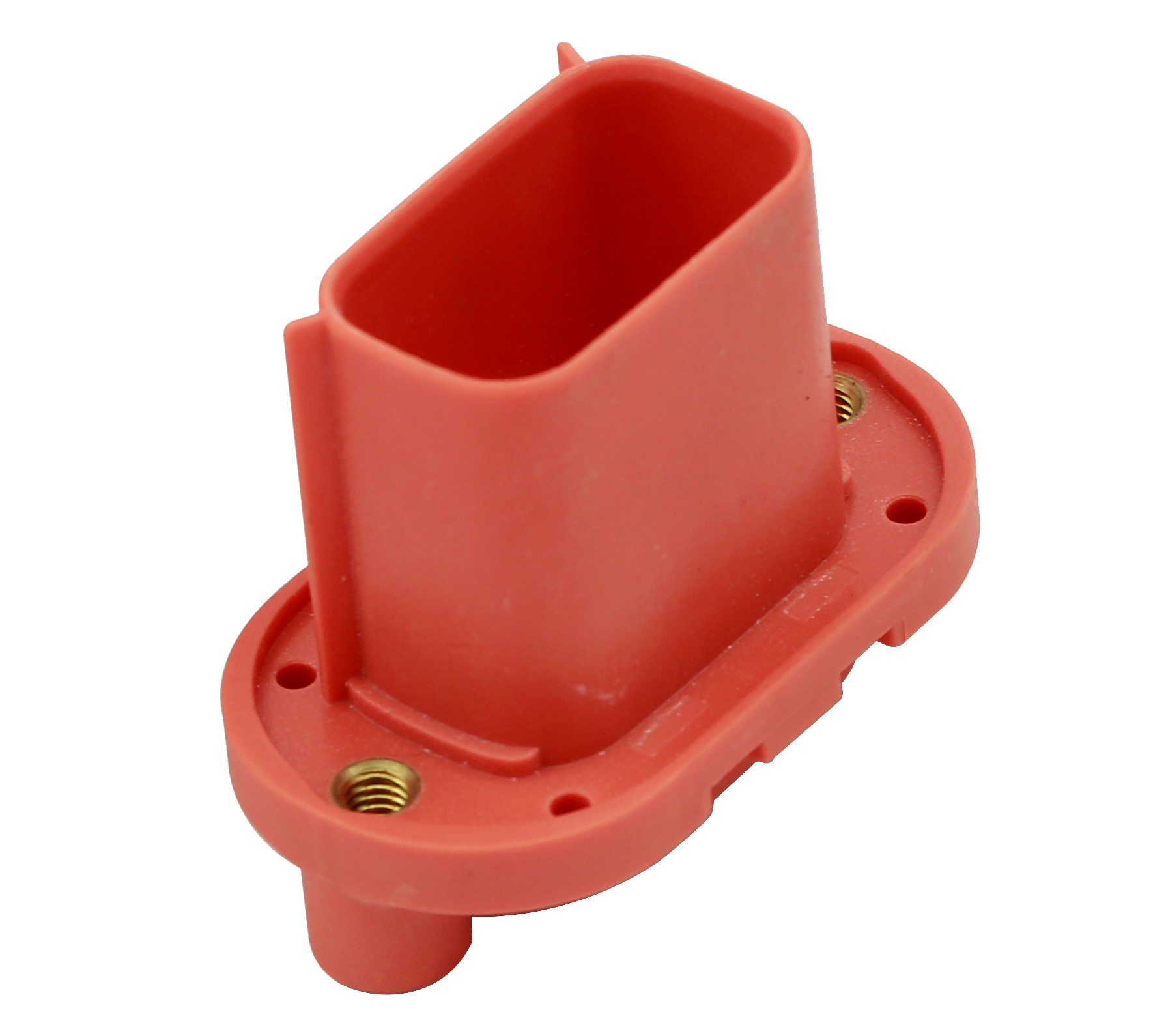
Automotive connectors endure brutal physical conditions alongside electrical stress. Assembly lines subject them to high-impact mating forces. Road vibrations test their structural limits continuously. Unfilled plastics lack the rigidity required for these tasks.
Engineers solve this by specifying 25% to 35% glass fiber reinforced PA66. This reinforcement dramatically improves tensile strength and impact resistance. Heavy-duty applications rely heavily on this mechanical integrity. For instance, robust EV charging gun plastic must survive repeated drop tests onto concrete. Battery terminal housings must maintain strict dimensional tolerances under extreme clamping loads.
When selecting materials, engineers frequently compare PA66 against PBT (Polybutylene Terephthalate). PA66 boasts a significantly higher heat deflection temperature (HDT). It also offers superior toughness and impact resistance. We must acknowledge PBT possesses lower moisture absorption. However, PA66 remains the preferred choice where structural integrity at high temperatures matters most.
Comparing halogen-free variants against traditional halogenated PA66 reveals distinct advantages. Halogen-free compounds exhibit a notable reduction in material density. Lower density translates directly to weight savings across the vehicle platform. Every saved gram extends the vehicle's driving range. Furthermore, non-halogenated options ensure immediate compliance with global environmental regulations.
Adding flame retardants traditionally weakens base polymers. Highly loaded flame retardant plastics often become brittle. They lose their natural impact resistance. Modern non-halogenated compounding techniques successfully mitigate this drop-off. Advanced synergistic additives maintain the V-0 flame rating without destroying the polymer chain integrity. You gain superior electrical isolation without sacrificing mechanical toughness.
Property | Halogen-Free PA66 GF25 | Halogenated PA66 GF25 | PBT GF30 |
|---|---|---|---|
Density / Weight | Lower (Better) | Higher | Highest |
Heat Deflection (HDT) | Excellent (>240°C) | Excellent | Moderate |
Moisture Absorption | Hygroscopic (Requires design care) | Hygroscopic | Low |
Environmental Compliance | Full RoHS/REACH | Restricted/Phased Out | Full RoHS/REACH |
Transitioning to specialized engineering polymers introduces unique manufacturing challenges. Design teams must align closely with injection molding partners to prevent production failures. PA66 possesses a well-documented hygroscopic nature. It absorbs moisture from the surrounding environment. This moisture uptake acts as a natural plasticizer.
You must account for moisture conditioning variables early in the design phase. As the polymer absorbs water, it swells slightly. This impacts tight dimensional tolerances in multi-pin connectors. Furthermore, moisture temporarily lowers the material's electrical resistance. Engineers must demand testing data in both Dry-As-Molded (DAM) and conditioned states. A typical conditioned state involves 50% Relative Humidity. Designing solely based on DAM data leads to field failures in humid climates.
Tooling and molding wear present significant operational hurdles. Glass fibers are inherently abrasive. When combined with specific halogen-free flame retardant additives, the compound wears down standard molds quickly. We strongly recommend hardened steel tooling for high-volume injection molding. Standard tool steel will suffer rapid degradation, leading to flash on the connector bodies.
Molding technicians must respect narrow processing windows. Halogen-free compounds degrade quickly if overheated. You cannot leave the material sitting in the barrel for extended periods. Excessive temperatures cause the flame retardant additives to outgas. This outgassing produces poor surface finish, weak weld lines, and compromised flame resistance. Strict mold temperature control remains absolutely vital for success.
Selecting the optimal material requires a disciplined, step-by-step methodology. Haphazard material selection wastes time and development budgets. Follow this structured approach to qualify the correct compound.
Step 1: Define Voltage and Geometry Constraints. You must map the required CTI rating against the physical connector design. Evaluate the pitch, which is the exact distance between metal pins. Analyze the minimum wall thickness separating conductive elements. Higher voltages in tighter spaces demand PLC 0 (600V+) ratings to guarantee safety.
Step 2: Environmental Mapping. Determine the precise continuous operating temperatures within the vehicle zone. Map out all chemical exposure risks. High-voltage connectors frequently encounter automotive fluids, greases, and specialized dielectric coolants. The chosen polymer must resist chemical degradation over the vehicle's lifespan.
Step 3: Certification Verification. Never accept unverified supplier claims. You must mandate the provision of official UL Yellow Cards. Demand current RoHS and REACH compliance certificates. Request independent laboratory data proving Relative Thermal Index (RTI) performance under long-term thermal aging conditions.
Step 4: Prototyping and Validation. Initiate comprehensive moldflow analysis before cutting steel for tooling. Order physical sample lots. Mold prototype parts to test structural weld-line strength. Subject these prototypes to real-world moisture conditioning. Measure the actual impacts on dielectric properties and dimensional stability.
Specifying the correct material forms the foundation of electric vehicle safety. A highly engineered halogen-free flame retardant PA66 mitigates severe arcing risks while easily meeting aggressive EV industry standards. It successfully replaces toxic legacy plastics without sacrificing mechanical toughness. Engineers secure reliable long-term performance by respecting the material's processing windows and moisture characteristics.
Always verify UL 94 V-0 ratings at the specific wall thickness of your connector design.
Insist on CTI 600V (PLC 0) to eliminate electrical tracking in 800V architectures.
Account for moisture absorption during your dimensional and electrical validation phases.
Upgrade tooling to hardened steel to withstand glass fiber abrasion during high-volume molding.
Take proactive steps today to secure your supply chain. We encourage engineers and procurement professionals to request detailed Technical Data Sheets (TDS). Obtain official UL documentation and order material sample lots to validate performance for your specific EV connector applications.
A: Halogen-free PA66 eliminates the emission of toxic, corrosive smoke during a vehicle fire. Traditional brominated plastics release lethal gases that endanger passengers and destroy surrounding electronics. Furthermore, halogen-free options ensure strict compliance with global environmental directives like RoHS and REACH, simplifying end-of-life recycling for OEMs.
A: PA66 is hygroscopic and naturally absorbs water from the air. This moisture acts as a plasticizer, causing a temporary dip in dielectric strength and volume resistivity. Engineers must anticipate this behavior by designing and validating components based on 50% Relative Humidity conditioned data, rather than just Dry-As-Molded figures.
A: Yes. When properly compounded, glass-filled PA66 provides exceptional mechanical toughness necessary for brutal drop-tests and daily impacts. However, external applications require specialized formulations incorporating UV stabilizers to prevent ultraviolet degradation and embrittlement from prolonged outdoor sunlight exposure.
A: The industry standard demands a Comparative Tracking Index (CTI) of Performance Level Category (PLC) 0. This category guarantees a rating of 600V or higher. Achieving this specification prevents electrical tracking and short circuits across the polymer surface in dense, high-voltage architectures.