+86-512-52396378
sales@szuniking.com
sales@szuniking.com
1 Longteng Rd, Tonggang Industrial Park, Changshu ETDZ, Jiangsu Province, China 215511
Views: 0 Author: Site Editor Publish Time: 2026-09-18 Origin: Site


In demanding automotive, aerospace, and industrial applications, thermal degradation causes catastrophic component failures. Engineers face immense pressure to select thermoplastics capable of maintaining structural integrity. You must achieve this reliability without over-engineering component designs. Polyphenylene sulfide (PPS plastic) routinely undergoes rigorous evaluation for its distinct thermal profile. However, specifying it correctly requires deep technical understanding. You must know exactly how continuous heat exposure versus peak thermal shocks alters its mechanical and chemical states.
This article defines the precise thermal boundaries of this specialized polymer. We highlight the structural trade-offs you will encounter at elevated temperatures. By the end, you will have a clear, actionable framework for evaluating if this high-performance resin fits your specific operational requirements.
To accurately deploy this polymer, we must first establish its fundamental thermal boundaries. The glass transition temperature (Tg) of standard grades sits near 85°C. At this threshold, the amorphous regions of the polymer begin to soften. However, the high crystallinity of the material ensures structural failure does not occur here. The true melting point (Tm) reaches an impressive 285°C. This wide operational window between Tg and Tm dictates how engineers apply the material in real-world scenarios.
You must differentiate between continuous use and peak thermal excursions. Continuous Use Temperature (CUT) indicates long-term thermal aging limits. This polymer handles continuous exposure around 200°C to 240°C effortlessly. Peak excursions refer to short-term thermal shocks, like wave soldering. The material survives brief spikes up to 260°C without melting or losing its molded shape.
Reading PPS plastic specifications requires a critical eye. Do not rely solely on marketing claims. Instead, look for standardized testing data. UL 746B ratings confirm long-term thermal endurance. ISO 75 testing validates the heat deflection temperature under specific loads. These standardized metrics provide a reliable baseline for engineering calculations.
Fillers drastically alter these baseline limits. Neat, unfilled resin offers decent chemical resistance but lacks high-temperature rigidity. Manufacturers compound the base resin using glass fibers or minerals to enhance its structural limits. Adding 40% glass fiber pushes the Heat Deflection Temperature (HDT) above 260°C. This transforms a moderately strong plastic into a viable metal replacement.
| Property | Unfilled Resin | 40% Glass-Filled Grade |
|---|---|---|
| Glass Transition (Tg) | ~85°C | ~85°C |
| Melting Point (Tm) | ~285°C | ~285°C |
| Heat Deflection Temp (1.8 MPa) | ~110°C | >260°C |
| Continuous Use Temp (UL 746B) | ~200°C | 200°C - 240°C |
Elevated temperatures naturally challenge the mechanical strength of any polymer. However, this specific material resists deformation under continuous load exceptionally well. Creep resistance becomes critical when components operate above 150°C. Many standard engineering plastics will slowly deform or stretch under stress at these temperatures. Highly crystalline structures prevent this polymer chains from sliding past one another. This locks the component shape in place during prolonged thermal exposure.
Dimensional integrity defines the success of precision parts. The coefficient of linear thermal expansion (CLTE) measures how much a material expands as it heats up. Filled grades boast an exceptionally low CLTE, closely matching many metals. This allows you to design tight tolerances for under-hood automotive sensors or aerospace housing units. The parts will not bind or warp as engine temperatures fluctuate.
Tensile and flexural retention do experience a drop-off as temperatures climb. You should expect mechanical properties to decline as ambient heat approaches 200°C. Understanding this decline helps set realistic expectations for load-bearing applications.
Moisture-heat synergy adds another layer of stability. Many polymers absorb atmospheric moisture, which then turns to steam during high-heat exposure. This steam causes dimensional warping and blistering. This material features inherently low moisture absorption (typically below 0.02%). It simply ignores the steam-induced dimensional warping common in lesser nylons.
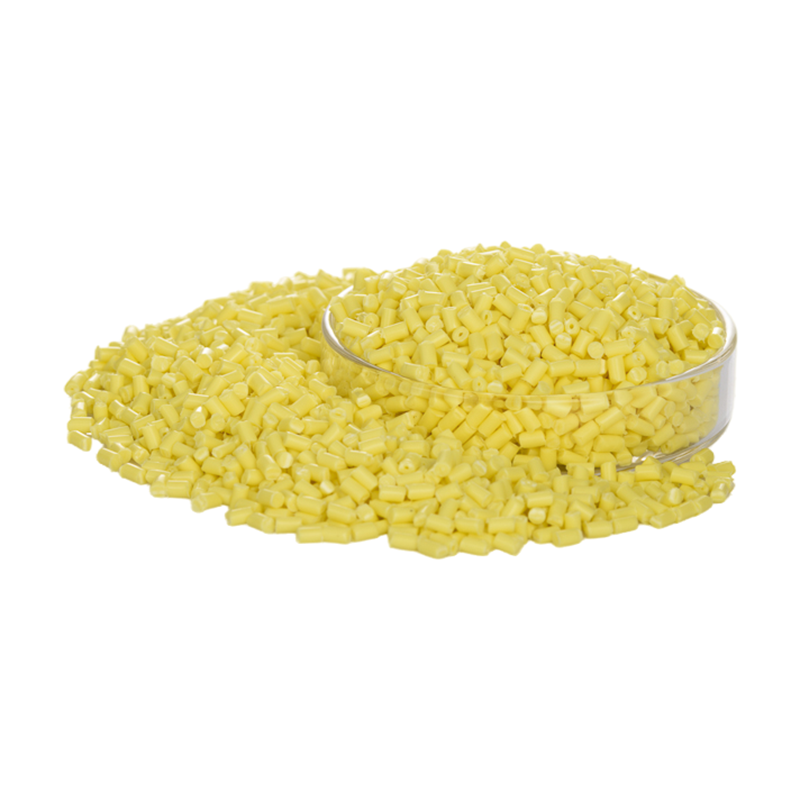
Chemical inertness represents the true superpower of this polymer, especially when combined with high heat. Below 200°C, there are virtually no known solvents that can dissolve it. Most plastics lose their chemical resistance as they get hot. Heat accelerates chemical reactions and increases polymer permeability. This specific polymer defies that trend, maintaining its impenetrable barrier even near its thermal limits.
Aggressive media exposure is a daily reality in industrial environments. Components regularly face automotive fluids, aggressive hydrocarbons, and industrial acids. High operating temperatures typically turn these fluids into highly corrosive agents. Engineers rely on this material for fuel rails, coolant systems, and exhaust gas recirculation (EGR) valves. It withstands these hostile chemical cocktails without swelling or embrittlement.
Hydrolysis resistance further separates it from the pack. High-temperature steam and boiling water quickly degrade many polyesters and polyamides. This polymer easily survives thousands of hours in pressurized steam environments. This makes it an essential choice for medical sterilization equipment, dental tools, and commercial HVAC internal components.
When auditing material choices for fluid handling systems, you must weigh the combined thermal-chemical failure risk. Evaluate the maximum fluid temperature against the exact chemical composition. A polymer might survive the chemical at room temperature, but fail at 150°C. This specialized resin mitigates this dual-threat risk entirely.
Selecting the right thermoplastic requires balancing performance limits against project budgets. This resin serves as the ideal bridge. It sits comfortably between standard engineering plastics and ultra-high-performance polymers like PEEK. It offers premium thermal stability without the extreme price tag of aerospace-only materials.
When comparing downmarket, we frequently contrast it against high strength and weather resistance pa6 (Nylon 6). Nylon 6 performs exceptionally well in general industrial applications. It succeeds where high impact resistance and lower material costs are paramount. However, PA6 fails in two critical high-heat areas: moisture absorption and heat deflection. In environments exceeding 150°C with high humidity, PA6 loses dimensional stability. This specialized polymer completely outperforms PA6 in hot, wet environments.
Comparing upmarket requires acknowledging when PEEK becomes structurally necessary. You should specify PEEK if your continuous operational temperatures consistently exceed 250°C. PEEK also offers significantly higher impact strength and toughness. If your part experiences both extreme heat and violent physical impacts, PEEK justifies its higher price point.
| Application Requirement | Standard PA6 (Nylon) | Filled PPS | PEEK |
|---|---|---|---|
| Continuous Temp < 120°C | Excellent fit | Over-engineered | Over-engineered |
| Continuous Temp 150°C - 240°C | Fails (Loss of rigidity) | Ideal fit | Viable but expensive |
| High Moisture / Steam Presence | Fails (Absorbs water) | Excellent fit | Excellent fit |
| High Impact Strength Required | Good | Poor (Brittle) | Excellent |
Every engineering material carries trade-offs. Inherent brittleness stands as the primary drawback of this resin. High crystallinity provides excellent heat and chemical resistance, but it sacrifices elongation at break. This makes the material notch-sensitive. Sharp corners in part design will concentrate stress and lead to cracking under sudden impacts. You must design parts using generous radii and avoid sharp internal angles to mitigate this risk.
Processing and tooling realities also complicate implementation. Achieving the optimal structural stability requires high mold temperatures. Injection molds often must run hotter than 135°C to ensure full crystallization. If the mold runs too cold, the polymer cools in an amorphous state. This ruins its high-heat performance and causes dimensional warping later when the part encounters heat in the field. Tooling must feature proper heating channels to maintain these temperatures.
Flash generation poses a significant manufacturing challenge. At processing temperatures, the melt viscosity drops dramatically. The molten plastic flows almost like water. It will find its way into microscopic gaps in the mold parting lines, creating unwanted flash. Molders must use high-precision, tightly toleranced steel tools. Venting must be calculated carefully to prevent this leakage.
Engineering teams can streamline procurement by utilizing a robust find by material database approach. This strategy helps filter exact compounding ratios. Different thermal targets require specific glass or mineral percentages. Searching a structured database prevents engineers from guessing which grade fits their load-bearing profile best.
Rigorous thermal performance relies heavily on compounding consistency. If the glass fibers distribute unevenly during compounding, the final molded part will feature weak spots. These weak spots fail predictably under high heat. Batch-to-batch consistency separates premium compounders from inferior ones. You need a partner who enforces strict quality control on filler dispersion.
Demand comprehensive testing and compliance documentation before approving a resin. Essential certifications include UL ratings for continuous use temperatures. Automotive applications require complete Production Part Approval Process (PPAP) documentation. Aerospace and electronics projects may require verified outgassing data. A reliable supplier provides these documents readily without hesitation.
Technical support often dictates the success of your molding project. Because of the low melt viscosity and high mold temperature requirements, processing guidance is crucial. You need a PPS plastic supplier who provides accurate mold-flow analysis data. They should help optimize gate locations and cooling layouts to prevent premature component failure.
To initiate the next steps, request material sampling for pilot testing. Prototype your tools using the exact compound specified. Run these prototypes through thermal cycling ovens and chemical baths. Verify the supplier’s data sheet claims against your real-world operational loads before moving into mass production.
This specialized polymer remains a highly reliable solution for environments where extreme heat and chemical exposure overlap. It fills a critical void in the plastics industry, delivering metal-like stability without the prohibitive costs of ultra-high-performance resins. Its unique molecular structure defies the typical thermal degradation seen in lesser plastics.
Your core decision criteria must focus on strict dimensional requirements and chemical inertness needs. If your application demands continuous operational temperatures between 150°C and 240°C alongside harsh fluids, this material excels. However, you must design around its inherent brittleness and accommodate its demanding processing requirements.
Always cross-reference your specific application loads with verified supplier data sheets. Secure samples, conduct rigorous thermal prototyping, and partner with compounders who guarantee batch-to-batch consistency. Careful material selection today prevents catastrophic failures in the field tomorrow.
A: The material reaches its glass transition temperature (Tg) near 85°C, where slight softening occurs. However, it maintains strong structural integrity due to high crystallinity. Significant property shifts and strength drop-offs become noticeable as temperatures approach 200°C. The exact failure point depends heavily on the percentage of glass or mineral fillers used.
A: Yes. Engineers frequently use filled grades to replace aluminum and steel in automotive and aerospace parts. It provides massive weight reduction benefits and excellent corrosion resistance. However, you must carefully evaluate absolute tensile trade-offs, as it lacks the sheer impact toughness of forged metals.
A: Adding glass fibers dramatically increases the material's structural rigidity under heat. Unfilled grades have a low Heat Deflection Temperature (HDT) around 110°C. Reinforcing the polymer with 40% glass fiber pushes the HDT beyond 260°C, unlocking its true potential for high-stress, high-heat environments.
A: Yes, it is exceptionally stable. The material possesses a very low coefficient of linear thermal expansion (CLTE) and high crystallinity. It absorbs virtually no moisture. These factors prevent the warping, swelling, and cracking typically caused by sudden and repeated temperature shifts.