+86-512-52396378
sales@szuniking.com
sales@szuniking.com
1 Longteng Rd, Tonggang Industrial Park, Changshu ETDZ, Jiangsu Province, China 215511
Views: 0 Author: Site Editor Publish Time: 2026-10-18 Origin: Site


Weight reduction without sacrificing structural integrity. This is the daily challenge for engineers in automotive and industrial manufacturing. Shaving off a few grams or boosting thermal resistance by a single degree directly dictates a product's market success. Glass fiber reinforced polymers effectively bridge the performance gap between standard commercial plastics and heavy metal alloys.
This technical guide breaks down the chemical behavior, mechanical advantages, and practical applications of this composite. By understanding how the material reacts under intense stress and thermal cycling, product designers and mechanical engineers can make data-driven material choices for their next production run.
Integrating glass fibers fundamentally transforms standard polypropylene, drastically enhancing tensile strength, thermal stability, and dimensional accuracy.
An engineering sweet spot exists at the 30% reinforcement ratio. This specific blend offers an optimal intersection of structural rigidity and manageable injection molding processability.
Specified heavily for metal replacement strategies, this composite slashes overall component weight while maintaining critical load-bearing performance.
Fiber length dictates energy absorption. Understanding the distinction between short and long glass fibers is crucial for optimizing impact resistance and preventing premature field failures.
Creating a structural composite involves far more than simply mixing two ingredients together. Picture the factory floor. Raw thermoplastic polymer pellets are melted in a twin-screw extruder at temperatures exceeding 200°C. Simultaneously, precisely chopped or continuous glass strands are fed into the molten mix. To ensure these two vastly different materials bond securely, chemical coupling agents like maleic anhydride grafted polypropylene are introduced. The non-polar plastic matrix must adhere perfectly to the polar glass fibers.
The primary purpose of this intricate compounding process is to overcome the inherent physical limitations of standard commodity plastics. Unreinforced resins offer excellent chemical resistance and high flexibility. However, they lack the load-bearing capabilities required for heavy-duty structural applications like industrial pump housings or automotive brackets. By integrating a rigid fibrous network, manufacturers transform a basic plastic into a robust engineering-grade composite. When evaluating base resins for a new project, engineers often explore various glass fiber reinforced polypropylene formulations to determine the exact level of reinforcement necessary to meet their specific performance criteria.
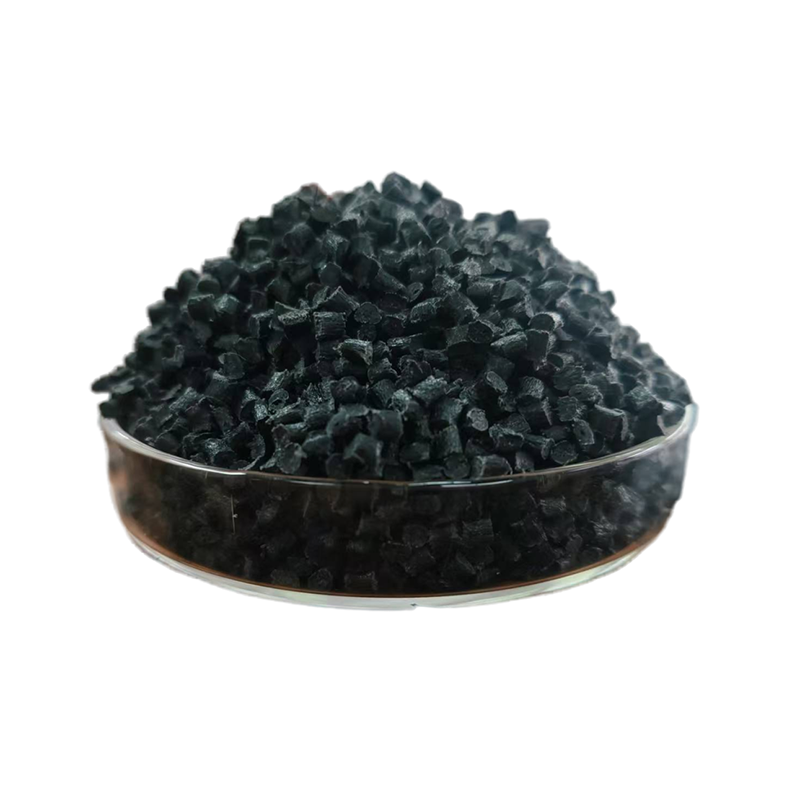
The addition of microscopic glass strands fundamentally alters the mechanical DNA of the base polymer. Glass possesses a significantly higher stiffness than the plastic matrix. Consequently, it acts as the primary load-bearing element within the composite. When mechanical stress is applied to a molded part, the force seamlessly transfers from the pliable polymer to the rigid glass fibers.
This load-sharing mechanism dramatically amplifies both the tensile strength and the flexural modulus. For instance, an unfilled base might exhibit a tensile strength of around 30 MPa. In contrast, a well-compounded reinforced variant easily exceeds 85 to 100 MPa. The flexural modulus similarly skyrockets from roughly 1.2 GPa to over 5.5 GPa, allowing the material to resist severe deformation under continuous stress.
Does filling plastics with glass make them overly brittle? The objective answer requires understanding the trade-off between stiffness and ductility. Imagine a plastic bracket holding a vibrating motor. If it stretches too much under a load, the entire assembly fails. Adding glass fibers slashes the material's elongation at break from over 100% down to a mere 3% to 5%.
While this reduction in flexibility makes the material less ductile, it vastly improves its structural integrity. To mitigate sudden impact failure, compounders often incorporate elastomeric modifiers. These additives enhance energy absorption without compromising the newly acquired rigidity.
Unreinforced plastics are notoriously susceptible to thermal expansion and mold shrinkage. This instability can ruin tight-tolerance engineering designs. The rigid internal framework of glass fibers restricts the movement of polymer chains when exposed to heat. This results in a remarkably low coefficient of linear thermal expansion and minimal mold shrinkage. A component that might warp at 90°C can suddenly maintain its exact dimensional shape at temperatures exceeding 140°C.
Property |
Standard Unfilled PP |
30% Glass Fiber Reinforced PP |
|---|---|---|
Tensile Strength |
~30 MPa |
85 - 100 MPa |
Flexural Modulus |
~1.2 GPa |
5.5 - 6.0 GPa |
Heat Deflection Temperature |
~90°C |
>140°C |
Mold Shrinkage Rate |
1.5% - 2.0% |
0.3% - 0.5% |
On the injection molding shop floor, tool wear and melt flow dictate profitability. The 30% glass fiber PP compound is universally regarded as the industry standard formulation. Why is this specific ratio so dominant? It provides the most effective middle ground between mechanical enhancement, cost efficiency, and manufacturing feasibility.
At the 30% threshold, the material achieves a highly desirable balance. The tensile and flexural properties are elevated enough to confidently replace heavier die-cast metals. Meanwhile, the specific gravity remains relatively low at roughly 1.12 g/cm³. From a practical processing standpoint, maintaining a 30% glass content prevents the melt viscosity from spiking uncontrollably. The molten plastic can easily flow into complex, thin-walled mold cavities without premature freezing.
Furthermore, highly filled grades approaching 50% glass act like liquid sandpaper. They aggressively chew through injection molding screws, barrels, and expensive mold tooling. The 30% formulation keeps these tool maintenance costs highly manageable while delivering exceptional surface finishes.
Analyzing recent market trajectories reveals a massive surge in demand for lightweight composites. This shift is primarily driven by the electric vehicle revolution and stringent global sustainability mandates. As automakers scramble to offset the immense weight of lithium-ion battery packs, the transition from heavy metal alloys to advanced structural plastics is no longer just a cost-saving measure. It is an absolute engineering necessity. Additionally, industrial equipment manufacturers are moving away from cast iron and aluminum to lower shipping weights and eliminate rust issues entirely, pointing toward a sustained boom in the engineered plastics sector.
By utilizing high rigidity polypropylene to replace die-cast aluminum or steel, engineers can achieve up to a 50% reduction in component weight. In the automotive sector, this directly translates to extended driving ranges for electric vehicles and improved fuel efficiency for internal combustion engines. In industrial applications, lighter pump housings and impellers mean less strain on motor shafts and lower energy consumption during operation.
Beyond the obvious weight savings, adopting this engineered composite provides substantial economic windfalls. The raw material cost is inherently lower than that of specialized engineering plastics like polyamide or polybutylene terephthalate. Lighter parts also mean significantly reduced shipping and logistics expenses. Inside the manufacturing facility, this material processes at lower temperatures than many competing resins. It cools rapidly within the mold, leading to shorter cycle times and vastly higher production throughput.
The base polymer is naturally highly resistant to a wide array of chemical agents. When reinforced with a fibrous skeleton, it retains this inherent resistance to moisture, harsh acids, alkalis, and various organic solvents. Unlike polyamide, which acts like a sponge and absorbs moisture from humid air, this composite absorbs virtually zero water. This lack of water absorption ensures predictable dimensional stability, making it exceptionally durable for fluid management systems and under-the-hood automotive applications.
Short glass fiber variants are manufactured using standard extrusion processes where continuous rovings are chopped into small segments before mixing. In the final molded component, these fibers typically measure less than a single millimeter in length. This material flows exceptionally well into intricate mold cavities. It is the go-to choice for general-purpose stiffening, complex geometric designs, and highly cost-sensitive manufacturing projects.
Conversely, long glass fiber composites are produced using a specialized pultrusion process. Continuous fibers are pulled directly through a polymer bath, ensuring they remain the exact length of the final plastic pellet, typically 10 to 12 millimeters. During injection molding, these extended fibers intertwine to form a robust internal skeletal structure. This architectural advantage results in vastly superior energy absorption, exceptional cold-temperature impact strength, and a drastic reduction in creep.
Specifically, engineers should specify short fibers for internal structural components where high stiffness and low production costs are the primary objectives. In contrast, long glass fibers should be strictly reserved for crash-relevant automotive components, structural brackets exposed to continuous heavy vibrations, or load-bearing parts demanding exceptional impact resistance across extreme temperature variations.
The automotive industry stands as the undisputed largest consumer of these advanced composites. The material is heavily utilized to manufacture critical components such as front-end modules, instrument panel carriers, and under-the-hood engine covers. In the rapidly expanding electric vehicle market, it is frequently chosen for battery trays and structural mounting brackets.
Within the appliance and industrial pump industries, internal components must withstand a brutal combination of continuous hot water exposure, harsh chemicals, and relentless mechanical vibration. Glass-filled composites are the material of choice for washing machine outer drums, dishwasher base pans, and complex fluid pump housings. Its innate resistance to chemical degradation and superior vibration-damping properties make it far superior to traditional metals that are prone to long-term corrosion.
Selecting the perfect material requires a rigorous evaluation of potential compounding partners based on strict quality control metrics. A reliable supplier must demonstrate perfectly consistent fiber dispersion within the polymer matrix. Uneven distribution inevitably leads to weak points and unpredictable part failure in the field. Modern manufacturers should demand robust technical support, precise custom color matching, and lot-to-lot consistency backed by verifiable testing data.
Depending on the specific end-use application, a one-size-fits-all approach rarely succeeds. Product designers might need to incorporate specialized UV stabilizers for prolonged outdoor exposure, or highly specific glass ratios ranging anywhere from 10% to 50%. Careful collaboration with technical material experts ensures the selected compound aligns seamlessly with both the mechanical demands and the financial constraints of the project.
Glass fiber reinforced composites have proven to be a truly transformative force in the world of modern manufacturing. By brilliantly combining the chemical resistance and low density of standard commercial plastics with the immense structural rigidity of glass fibers, this material serves as a durable, lightweight, and highly cost-efficient alternative to traditional metals.
Ultimately, choosing the precise formulation can directly dictate the mechanical success, field longevity, and overall profitability of an entire product line. Material selection is the foundational step of any successful manufacturing endeavor, requiring a thorough understanding of physical properties and practical processing behaviors.
If you are developing a new product, battling with part warpage, or looking to aggressively optimize an existing component through metal replacement, material expertise is critical. We invite you to explore Unikingtech's comprehensive range of high-performance composites. Our technical engineering team is ready to provide expert material selection advice, supply testing samples, and offer a detailed quote for your specific injection molding requirements.
A: While the addition of glass reduces the material's overall flexibility, it significantly increases its tensile strength and structural rigidity. It becomes less ductile, but not necessarily fragile. Using long glass fibers or blending in specific elastomeric impact modifiers can effectively mitigate this brittleness, ensuring the material absorbs sudden shocks.
A: Standard unfilled polypropylene is highly flexible, relatively soft, and prone to warping under elevated heat or sustained mechanical stress. High rigidity polypropylene achieves its strength through the precise integration of a glass fiber network. It maintains its exact dimensional shape, supports heavy mechanical loads without bending, and withstands much higher operating temperatures.
A: Yes. Because it utilizes a thermoplastic matrix, the material can be ground down, melted, and repurposed. However, the physical glass strands often break and shorten during the aggressive grinding process. This fiber degradation can slightly reduce the mechanical properties and overall stiffness of the recycled batch compared to virgin material.
A: The 30% formulation offers the ideal engineering trade-off. It maximizes structural strength and heat resistance while maintaining a smooth, easy melt flow for the injection molding process. This specific ratio provides excellent mechanical enhancement while keeping tooling wear and overall raw material costs highly manageable.
A: Standard polypropylene has a relatively high mold shrinkage rate, often between 1.5% and 2.0%. The addition of glass fibers creates a rigid internal skeleton that resists the natural contraction of the polymer as it cools. This reduces the shrinkage rate drastically, often down to 0.3% to 0.5%, allowing for the manufacturing of high-precision, tight-tolerance parts.
A: In its natural state, polypropylene is susceptible to degradation from prolonged exposure to ultraviolet light, which can cause chalking and embrittlement. While the glass fibers themselves do not degrade, the polymer matrix still requires protection. For outdoor applications, specialized UV stabilizers and carbon black must be compounded into the material to ensure long-term weatherability.