+86-512-52396378
sales@szuniking.com
sales@szuniking.com
1 Longteng Rd, Tonggang Industrial Park, Changshu ETDZ, Jiangsu Province, China 215511
Views: 0 Author: Site Editor Publish Time: 2025-11-11 Origin: Site


Sustainability is no longer a niche topic — it is now a defining factor in how industries choose materials and suppliers. Manufacturers in automotive, electronics, and consumer goods sectors are under increasing pressure to use recyclable and low-carbon materials without compromising quality or performance. Against this backdrop, nylon 6 pellets have drawn attention for their potential role in circular manufacturing. Known for exceptional tensile strength, impact resistance, and chemical durability, PA6 has long been an indispensable engineering plastic. Today, companies such as Suzhou UNIKING New Material Co., Ltd., a leading supplier of polymer composite materials in Jiangsu Province, are advancing PA6 recycling technologies and sustainable production practices that align with global environmental standards. This article examines the recyclability, performance, and design strategies that make PA6 an increasingly sustainable choice for modern industries.
Nylon 6, or polyamide 6, is one of the few engineering plastics that can be recycled both mechanically and chemically. Mechanical recycling is the more established route. It involves collecting, sorting, and cleaning PA6 waste — often from industrial processes like injection molding — and then melting it down to form new nylon 6 granules. This approach is relatively efficient and conserves resources, making it ideal for factories looking to reuse their own production scrap.
Still, mechanical recycling has its drawbacks. Reprocessing can degrade the polymer’s molecular structure, slightly reducing strength and elasticity. Additives, colorants, or contamination from other plastics can also interfere with the recycling process. Proper sorting and stabilizer additives are therefore essential to maintain quality.
Chemical recycling, by contrast, goes a step further. Through depolymerization, PA6 waste is chemically broken down into its base monomer, caprolactam. This monomer is then purified and repolymerized into virgin-quality resin. The result is material virtually indistinguishable from new PA6. Although the process requires significant energy and investment, it offers the potential for true circularity — reusing waste indefinitely without compromising mechanical or thermal properties.
Suzhou UNIKING New Material Co., Ltd. continues to invest in partnerships that explore both recycling methods, aiming to combine practicality with long-term environmental benefits.
Recycled nylon pellets have proven their worth across multiple industries. Mechanically recycled PA6 typically retains 85–95% of the performance of virgin material, depending on processing conditions. For less demanding applications — such as housing parts, consumer goods, or secondary automotive components — this performance level is more than adequate. Reinforcements like glass fiber or mineral fillers can further enhance mechanical strength and thermal stability.
Chemically recycled PA6, however, performs nearly identically to virgin material. Because it is rebuilt from purified caprolactam, it achieves the same molecular weight and structural uniformity. This makes it suitable for critical components like under-the-hood parts, gears, or electrical connectors, where consistent strength and heat resistance are essential.
Nevertheless, some challenges remain. Recycled materials may vary slightly in color and processing consistency from batch to batch. Supply stability can also depend on the availability of waste streams, particularly post-consumer sources like fishing nets or carpet fibers. To solve these issues, Suzhou UNIKING New Material Co., Ltd. implements advanced quality control and compounding techniques, ensuring every lot of recycled PA6 meets strict performance standards. This commitment allows customers to integrate sustainable materials into their production without sacrificing reliability.
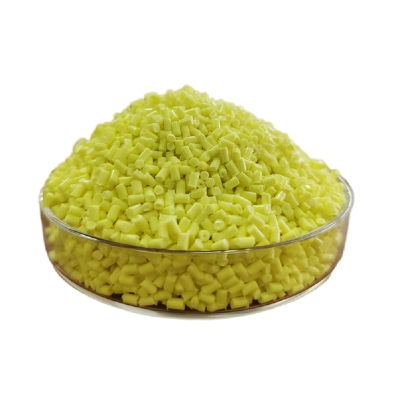
For businesses committed to sustainability, transparency is key. When sourcing recycled nylon pellets, buyers should request documentation proving recycled content. Certifications such as Global Recycled Standard (GRS), ISO 14021, and other third-party audits confirm the legitimacy of recycled claims and ensure compliance with international regulations.
Suppliers should also provide traceability systems that record the source, processing method, and quality test results of each batch. Suzhou UNIKING New Material Co., Ltd. offers full traceability for both virgin and recycled PA6 products, providing confidence and accountability to its global partners.
Procurement teams should evaluate suppliers not just on price, but also on their ability to maintain consistent mechanical properties, surface quality, and certification validity. Establishing a long-term partnership with a professional and experienced supplier ensures a stable, sustainable, and compliant supply chain — a factor increasingly valued by multinational manufacturers and brands.
Circularity starts at the design phase. Engineers and product designers can make a significant impact by choosing recyclable materials and simplifying product structures. For PA6, mono-material design — using a single polymer system throughout — is an effective way to reduce waste and make recycling easier. This eliminates challenges caused by mixed-material assemblies, paints, or incompatible adhesives.
Another emerging approach is to select additives and fillers that do not compromise recyclability. For example, halogen-free flame retardants, UV stabilizers, and bio-based plasticizers can enhance sustainability without sacrificing performance.
Suzhou UNIKING New Material Co., Ltd. actively promotes these principles by providing technical support and material customization. The company develops PA6 formulations optimized for recyclability, enabling customers to create high-performance products that can easily return to the production loop at end of life. This approach supports not only energy conservation but also compliance with evolving environmental policies worldwide.
The path toward a sustainable plastics industry depends on innovation, infrastructure, and collaboration. As recycling technology advances and global regulations tighten, nylon 6 is emerging as one of the most viable materials for circular manufacturing. Chemical recycling, in particular, is expected to scale rapidly in the coming decade, supported by investments in advanced polymer recovery systems.
Suzhou UNIKING New Material Co., Ltd. continues to lead this transition by combining material science expertise with responsible production. By offering a full range of PA6 solutions — from virgin to high-recycled-content pellets — the company empowers customers to reduce carbon footprints while maintaining world-class performance. Its dedication to quality, transparency, and innovation has positioned UNIKING as a reliable partner in the move toward sustainable manufacturing.
The evolution of sustainable engineering plastics is redefining modern production, and nylon 6 pellets are central to that transformation. Their recyclability, combined with strong mechanical and chemical performance, allows manufacturers to align environmental goals with product excellence. By adopting recycled materials, verifying certifications, and designing for circularity, businesses can build a more responsible future.
Suzhou UNIKING New Material Co., Ltd. remains committed to supporting global customers with high-quality, eco-conscious solutions. Whether you are exploring virgin, mechanically recycled, or chemically recycled nylon 6 granules, our materials can help achieve both sustainability and performance targets. Contact us today to learn more about how our innovative PA6 solutions can contribute to your next-generation, sustainable production goals.