+86-512-52396378
sales@szuniking.com
sales@szuniking.com
1 Longteng Rd, Tonggang Industrial Park, Changshu ETDZ, Jiangsu Province, China 215511
Views: 0 Author: Site Editor Publish Time: 2025-10-22 Origin: Site


Many production challenges with PA 6 parts — such as brittleness, sink marks, or surface defects — can be traced back to improper material handling. For manufacturers aiming for precision and consistency, every stage from receiving to molding matters. At Suzhou UNIKING New Material Co., Ltd., we understand that even high-quality nylon 6 pellets must be processed under the right conditions to achieve their full performance potential. This guide offers a practical step-by-step approach to help processors and engineers get the best results from PA6 during molding or extrusion operations.
Proper handling begins the moment your material arrives at the factory. Nylon 6, being hygroscopic, readily absorbs moisture from the air. Excess humidity can lead to poor surface finish, reduced tensile strength, and voids in molded parts. To prevent such issues, it is crucial to manage storage conditions from the start.
Store the pellets in sealed, moisture-proof containers — ideally aluminum-lined bags or drums with tight lids. If materials arrive in open packaging, reseal them immediately after inspection. Use a dedicated dry and clean warehouse space where humidity remains below 50% and temperature below 30°C. Humidity control equipment such as dehumidifiers is strongly recommended, especially in coastal or tropical environments.
Follow the first-in, first-out (FIFO) principle to ensure older batches are consumed before new ones. This minimizes the risk of long-term moisture absorption and contamination. Although nylon 6 granules are chemically stable, prolonged exposure to air and temperature fluctuations can gradually affect their performance. Under proper storage, their shelf life can extend beyond 12 months, maintaining the consistency required for high-precision molding applications.
When transferring materials to the production area, do so quickly and avoid unnecessary exposure to ambient air. Open the container only when the pellets are ready for drying or loading into the hopper. Such small but essential steps ensure that what you process is the same quality material that left the factory.
Among all preparation steps, drying is the most crucial for PA 6. Because of its hygroscopic nature, PA6 can absorb moisture up to several percent of its weight, even under normal room conditions. If this moisture is not removed before processing, it can cause hydrolytic degradation, resulting in reduced molecular weight, lower mechanical strength, and surface defects such as silver streaks or bubbles.
The recommended drying temperature for nylon 6 pellets is between 80°C and 90°C for at least 4 to 6 hours. If moisture levels are high due to poor storage, extending the drying time up to 8 hours may be necessary. For optimal results, measure the residual moisture content — ideally, it should be below 0.12% before molding.
During the drying process, maintain consistent airflow and ensure that hot air circulates evenly throughout the pellets. Avoid over-drying, which can cause oxidation or color changes, especially for light-colored or transparent grades. Using a reliable drying system with accurate temperature and humidity control ensures consistent pre-processing quality.
When it comes to drying nylon 6 granules, not all systems are equal. Conventional hot-air ovens can remove surface moisture but struggle with moisture absorbed deep inside the polymer matrix. A desiccant dryer, on the other hand, circulates ultra-dry air with a dew point below –40°C, pulling moisture from within the granules more effectively.
Desiccant dryers maintain uniform drying conditions and prevent reabsorption during cooling. For high-volume industrial production, this method ensures stability across multiple batches. Oven drying may still be acceptable for small-scale or low-humidity environments, but processors should take extra care to monitor temperature fluctuations. When in doubt, desiccant drying provides a more reliable guarantee of quality and consistency for PA6 materials.
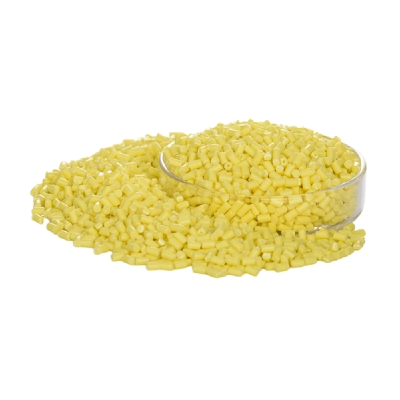
Once nylon 6 pellets are properly dried, the next step is to optimize processing parameters during molding or extrusion. Because PA6 melts between 215°C and 230°C, maintaining an accurate melt temperature is essential. Too low, and you risk incomplete melting and poor flow; too high, and the polymer may degrade, releasing gases or discoloration.
For injection molding, the recommended barrel temperature zones should gradually increase from 230°C in the feed zone to 260°C near the nozzle. Mold temperature plays a major role in surface finish and dimensional stability — 80°C to 90°C is ideal for minimizing internal stress and achieving a smooth, glossy surface.
Adjust back pressure between 50 to 100 bar to ensure uniform melt density, and keep screw speed moderate to prevent shear degradation. During packing and holding, apply consistent pressure to avoid sink marks or voids in thicker sections. Cooling time should be optimized so parts release easily without warping.
For extrusion processes, maintain a die temperature close to the melt temperature to avoid die drool or flow instability. Uniform cooling in the downstream water bath ensures dimensional consistency of the extruded profile or filament. The smoother and more controlled your processing conditions are, the fewer post-processing issues you will face.
Cycle time optimization can further enhance productivity. If parts show slight deformation, review mold cooling uniformity and gate design before adjusting temperatures excessively. Continuous monitoring of melt viscosity and torque also helps maintain consistent product quality.
Even with the best materials, improper handling or parameter drift can lead to visible defects. Here are the most frequent problems encountered with PA6 and how to fix them:
Short shots: Usually caused by insufficient injection pressure, low melt temperature, or improper venting. Increase melt temperature slightly and ensure gates are not too small or blocked.
Burn marks: These appear as dark or black spots and result from trapped air overheating during injection. Check for adequate venting, reduce injection speed, and avoid excessive back pressure.
Sink marks: Common in thicker sections due to insufficient packing pressure or premature gate sealing. Extend holding time or raise packing pressure slightly to compensate for material shrinkage.
Warping: Often occurs due to uneven cooling or internal stress. Make sure mold temperature distribution is balanced and part ejection is not forcing distortion.
Surface streaks or bubbles: Indicative of excessive moisture in the pellets. Review drying procedures and check for leaks in the hopper dryer system.
Keeping a troubleshooting checklist at the molding station helps technicians quickly identify and correct such issues. Regular preventive maintenance — cleaning filters, checking heaters, and verifying thermocouple calibration — reduces downtime and ensures long-term stability in production.
When consistent problems arise, consult technical support for a detailed parameter review. At Suzhou UNIKING New Material Co., Ltd., our engineering team can provide customized processing data sheets and on-site guidance to optimize each customer’s line conditions for PA6 applications.
In today’s competitive manufacturing environment, reliable processing makes all the difference between standard and superior performance. High-quality materials like nylon 6 pellets deliver exceptional strength, toughness, and stability only when handled correctly at every stage — from storage to final molding. Suzhou UNIKING New Material Co., Ltd. supports its global partners by offering premium PA6 materials and detailed technical assistance for every production step. To learn more about our nylon 6 granules and request technical consultation or processing recommendations, please contact us today.