+86-512-52396378
sales@szuniking.com
sales@szuniking.com
1 Longteng Rd, Tonggang Industrial Park, Changshu ETDZ, Jiangsu Province, China 215511
Views: 0 Author: Site Editor Publish Time: 2026-08-24 Origin: Site


Engineers frequently face a frustrating bottleneck when designing high-stress components. Standard plastics quickly degrade under extreme thermal stress, failing prematurely in the field. Conversely, relying on machined metals drastically inflates component weight and drives up production costs. You need a solution bridging this gap effectively without compromising safety. Enter high temperature nylon (HTN).
We define this material as a specialized, semi-crystalline polymer engineered specifically for harsh thermal and chemical environments. It thrives where conventional thermoplastics melt, warp, or shatter under pressure. This article serves as a technical and commercial evaluation guide tailored for engineering and procurement teams. We will help you determine if transitioning to these advanced polyamides fits your next demanding application. You will learn how to assess critical performance metrics, evaluate core industrial use cases, and navigate the realities of processing and mold design.
Performance Thresholds: High temperature nylons reliably bridge the gap between standard thermoplastics and ultra-high-performance polymers (like PEEK), maintaining structural integrity at continuous use temperatures often exceeding 150°C.
Primary Use Cases: Dominant in automotive under-hood components, lead-free surface mount technology (SMT) electronics, and heavy-duty industrial gear applications.
Evaluation Mandate: Selection requires balancing Heat Deflection Temperature (HDT), moisture absorption rates, and injection molding tooling costs.
Conversion Advantage: Offers up to 50% weight reduction compared to aluminum die-casting, with lower total part cost via simplified injection molding.
Many product teams push standard Nylon 6 or 66 far beyond their physical limits. When exposed to high-heat environments, these conventional materials reveal clear and catastrophic failure points. Parts warp out of tolerance quickly when subjected to rapid thermal cycling. They suffer a severe loss of tensile strength, often becoming dangerously brittle. Over time, continuous thermal degradation causes the molecular chains to break down. This inevitably leads to unexpected part failure in the field.
To solve this structural problem, polymer chemists developed semi-aromatic polyamides. Engineers across industries recognize them as the direct and logical upgrade path. Upgrading to a premium HTPA material resolves these strict thermal limitations. Crucially, it does so without sacrificing the inherent toughness and impact resistance making nylon so valuable.
How do we define a successful material transition? A proper switch achieves several strict success criteria. First, the part must maintain exacting dimensional stability during high-heat processes, such as lead-free soldering. Second, it needs to resist aggressive automotive fluids while sitting at peak engine temperatures. Finally, it must endure continuous mechanical loads without experiencing severe plastic creep. When you successfully transition, you avoid the heavy weight of die-cast metal while entirely escaping the thermal limits of standard plastics.
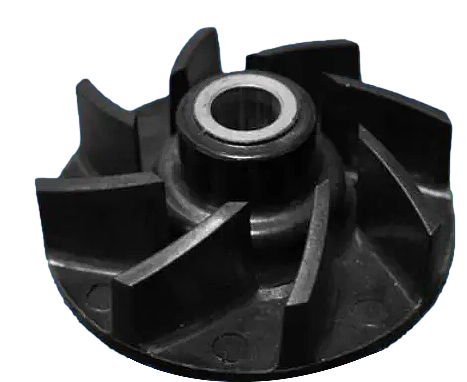
Engineering teams do not just switch materials blindly. They upgrade to solve specific environmental and mechanical challenges. Here are the core industrial sectors driving the rapid adoption of these specialized polymers.
Vehicle manufacturers actively replace traditional metal die-castings with advanced polymer blends. You will frequently find these materials utilized in thermostat housings, air intake manifolds, and complex coolant system components. The rapid rise of electric vehicles (EVs) has only accelerated this trend. Engineers now place these polymers near high-voltage battery systems to manage intense heat.
Outcome: They achieve substantial weight reduction across the vehicle architecture. Lighter vehicles directly improve fuel economy for combustion engines and extend battery range for EVs. At the same time, the components easily survive continuous, long-term exposure to boiling glycol, motor oil, and transmission fluids.
The electronics sector relies heavily on these polymers for miniaturized, high-density components. Typical applications include micro-connectors, circuit breaker housings, bobbin cores, and delicate mechanical switches. As modern electronics shrink, the heat generated in small spaces increases drastically.
Outcome: The parts withstand the short-term extreme heat of reflow soldering perfectly. Lead-free soldering profiles often exceed 260°C for several seconds. Standard plastics blister, off-gas, or melt under these conditions, destroying pin alignment. Premium grades endure this thermal shock effortlessly. Furthermore, they meet stringent UL94 flammability standards, ensuring ultimate consumer safety.
Harsh industrial environments demand materials capable of surviving high-friction and high-load scenarios. Manufacturers deploy them in wear-resistant gears, heavy-duty bearings, and critical safety rigging used in construction or material handling. Standard plastics deform rapidly when subjected to the constant vibration of factory floors.
Outcome: End-users see drastically reduced maintenance intervals and fewer equipment breakdowns. The superior fatigue resistance keeps machines running much longer. Many grades also feature self-lubricating properties. This greatly reduces friction and wear even when operating under intense thermal stress without applying external greases.
Choosing the right grade requires a strict decision-stage framework based on verifiable specifications. You must look past vague marketing claims and deeply analyze hard data points. Proper evaluation ensures the material handles the real-world operational loads intended for your design.
Here is a proven framework to evaluate any engineering resin effectively:
Assess Heat Deflection Temperature (HDT): Do not rely on simple melting points. The melting point only tells you when the plastic turns entirely liquid. Instead, evaluate the HDT parameters. Engineers typically measure this at a stress of 1.8 MPa. HDT reveals the exact temperature where a load-bearing part begins to physically deform under pressure. This specific metric dictates whether your gear or mounting bracket will survive operational stress.
Verify Chemical and Hydrolysis Resistance: Harsh environments involve more than just ambient heat. You must evaluate the material lifespan when continuously exposed to aggressive chemicals. Parts often face continuous soaking in hot coolants, industrial solvents, or heavy machining lubricants. Semi-aromatic structures naturally resist chemical attacks far better than standard aliphatic polymer chains.
Analyze Dimensional Stability vs. Moisture: Address the classic "nylon weakness" transparently. Traditional nylons act like sponges. They absorb water from the air, which swells the part and significantly drops its tensile strength. Advanced formulations intentionally absorb significantly less moisture. This reduced uptake ensures tighter manufacturing tolerances and predictable structural performance, even in highly humid factory settings.
Procurement teams must logically justify the financial cost of every material change. Objective comparisons help demonstrate trustworthiness when proposing a new high temperature polymer to stakeholders. You must prove the return on investment through performance gains and manufacturing efficiency.
Below is a detailed breakdown of how it stacks up against standard industry alternatives.
Alternative Material Category | Performance Comparison Details | Final Verdict / When to Choose |
|---|---|---|
Standard Nylon (PA6 / PA66) | Standard nylons lack long-term thermal endurance. They swell noticeably from moisture absorption and lose structural rigidity at elevated temperatures. They are significantly cheaper upfront but fail rapidly in extreme field environments. | Choose HTN when standard nylon fails your thermal or moisture-dimensional requirements. Expect a higher price per kilogram, but significantly fewer field failures. |
Ultra-High-Performance Plastics (e.g., PEEK) | PEEK offers absolute maximum thermal stability and near-total chemical resistance. However, it costs exponentially more to purchase and requires massive energy and specialized equipment to process. | HTN delivers roughly 80% of the mechanical performance of PEEK at a mere fraction of the raw material cost. PEEK is only necessary for extreme aerospace components or medical implants. |
Machined Metals (Aluminum / Zinc) | Metals offer massive yield strength but add unacceptable weight to the final assembly. They also demand expensive, time-consuming secondary machining operations for threads, holes, and surface finishes. | Choose HTN for high-volume component production. Weight reduction, parts consolidation, and the total elimination of secondary machining quickly offset upfront injection mold tooling costs. |
Review these careful comparisons deeply during your design phase. They actively prevent engineering teams from over-engineering a simple part or dangerously under-specifying a critical safety component.
Transitioning materials introduces complex implementation realities. Acknowledging adoption risks early ensures a much smoother manufacturing process and heavily prevents costly delays during mass production.
High-performance resins do not process like cheap commodity plastics. They strictly require specialized injection molding equipment. Your machinery must achieve extremely high melt temperatures safely. Furthermore, the steel molds themselves usually require advanced hot oil heating systems rather than standard water cooling channels. If your injection molder lacks this specialized equipment, parts will fail visually and structurally. They will suffer from poor surface finish, incomplete fills, and weak internal structures.
Design for Manufacturability (DFM) rules change significantly with semi-aromatic polyamides. You must maintain uniform wall thickness throughout the entire part design. Proper gating design becomes an absolute critical necessity. Since most of these grades use high ratios of glass-fiber reinforcement, engineers must accurately predict fiber orientation during injection. Poor orientation leads to severe anisotropic shrinkage. This directly causes massive warpage in the final product after it cools on the bench.
Pre-drying is an absolute, non-negotiable requirement. You must condition the raw pellets in desiccant dryers before processing them. Failing to remove trapped moisture leads to immediate material degradation during the hot molding cycle. This causes ugly splay marks, severe visual defects, and a massive drop in mechanical impact strength. Always follow the exact drying times and temperature parameters strictly listed on the manufacturer's technical data sheet.
Selecting the perfect heat resistant nylon comes down to matching your specific operational data. You must carefully align your continuous use temperature needs and chemical exposure profiles to the exact grade formulation. Do not guess or rely on generic data.
Take these actionable next steps to ensure project success:
Engage your material manufacturer directly to request comprehensive Technical Data Sheets (TDS) for specific grades.
Conduct a thorough Moldflow analysis to predict shrinkage, analyze weld lines, and optimize your gating strategy before cutting expensive tool steel.
Order sample material lots for physical prototyping. Ensure your structural testing closely reflects real-world thermal stress and chemical exposure over time.
A: You must differentiate between short-term peak temperature and long-term continuous use. For short-term spikes like wave soldering, these materials easily survive temperatures exceeding 280°C without melting. For long-term continuous use, they maintain structural integrity reliably between 130°C and 160°C. This threshold heavily depends on the specific glass-fiber reinforcement ratio utilized.
A: Yes, it does absorb some water. However, the absorption rate is significantly lower than standard aliphatic nylons. Its semi-aromatic chemical structure naturally resists rapid moisture uptake. This means your parts retain their mechanical properties, tensile strength, and tight dimensional stability even in highly humid operating environments.
A: Yes. Material scientists have developed specific filament and powder grades tailored for FDM and SLS technologies. However, you cannot use standard desktop printers. They require industrial 3D printers equipped with high-temperature heated chambers and specialized hardened nozzles. These advanced setups remain necessary to prevent severe warping during the printing process.