+86-512-52396378
sales@szuniking.com
sales@szuniking.com
1 Longteng Rd, Tonggang Industrial Park, Changshu ETDZ, Jiangsu Province, China 215511
Views: 0 Author: Site Editor Publish Time: 2026-04-27 Origin: Site


In the world of industrial materials, high-temperature polyamide (HTPA) has become a cornerstone for industries that demand materials capable of withstanding extreme temperatures and mechanical stress. Unlike traditional polyamide materials, HTPA is specially engineered to maintain its structural integrity, mechanical strength, and chemical resistance in conditions that exceed the normal performance limits of standard polymers. This makes it a preferred choice for a wide array of industries, including automotive, aerospace, electronics, and medical devices.
In this comprehensive article, we will explore the key properties of HTPA, its applications across different sectors, and the benefits that make it a game-changer for industrial manufacturing. By the end of this article, you'll understand why high-temperature polyamide is such an important material in modern engineering and manufacturing, and how Suzhou UNIKING New Material Co., Ltd. can help you incorporate HTPA into your products.
High-temperature polyamide (HTPA) is a type of polyamide polymer that is specifically formulated to withstand high heat while retaining mechanical properties such as strength, durability, and dimensional stability. Polyamides, in general, are commonly known for their toughness and resilience; however, standard polyamides often begin to lose their structural integrity at temperatures above 100°C. HTPA, on the other hand, is designed to perform well in environments with temperatures that range from 150°C to 300°C, making it ideal for more demanding applications.
HTPA is often used in situations where components are subject to constant heat or thermal cycling. This material is versatile, offering an optimal balance of heat resistance, chemical stability, mechanical strength, and electrical insulation—making it suitable for use in a wide range of industrial applications.
High-temperature polyamide possesses several unique properties that set it apart from standard polyamide and other polymers. Below are the key properties that make HTPA an ideal choice for high-stress environments.
One of the most prominent features of HTPA is its exceptional heat resistance. Unlike standard polyamides, which degrade or lose their mechanical strength at temperatures above 100°C, HTPA maintains its structural integrity and dimensional stability at much higher temperatures. Depending on the specific grade of HTPA, the material can perform at temperatures ranging from 150°C to 300°C without significant degradation.
This heat resistance is crucial in industries like automotive manufacturing, aerospace, and electronics, where components are frequently exposed to extreme temperatures. For example, engine components in the automotive industry or electrical connectors in aerospace applications benefit from the heat resistance of HTPA, ensuring long-lasting performance in high-temperature environments.
HTPA is known for its excellent mechanical properties. Even at elevated temperatures, HTPA retains its high tensile strength, impact resistance, and stiffness, which are critical for parts that must endure high loads and dynamic stress. These properties make it ideal for applications in industries that require high-performance materials capable of enduring significant mechanical stress without failure.
In the automotive sector, for example, HTPA is used in transmission parts, engine components, and exhaust systems because of its ability to withstand high mechanical loads while maintaining dimensional stability under stress.
HTPA exhibits excellent chemical resistance to a wide range of substances, including oils, fuels, acids, and solvents. This makes it an excellent material for fuel systems, chemical processing equipment, and automotive parts that come into contact with harsh chemicals.
For example, components like fuel lines, valves, and gaskets in automotive and aerospace applications benefit from the chemical resistance of HTPA, ensuring the longevity and functionality of these critical parts.
HTPA is also an excellent electrical insulator, which is essential for applications in electronics, electric vehicles, and high-voltage systems. The polymer’s dielectric strength and electrical insulating properties make it ideal for circuit boards, connectors, and electrical insulators in high-voltage applications.
In electronics, where high-performance insulation is required to prevent electrical short circuits and damage, HTPA’s ability to act as a dielectric makes it a vital component for reliable and safe operation in various electronic devices and battery systems.
HTPA maintains excellent dimensional stability under both thermal cycling and mechanical stress. The material’s resistance to expansion or contraction under varying temperatures ensures that components maintain their precise shape and function. This is especially important for precision components used in aerospace, automotive, and medical devices, where exact tolerances are required.
For instance, precision gears, seals, and electrical components must maintain their shape and size over long periods of use. The dimensional stability of HTPA ensures that these parts function optimally in demanding environments.
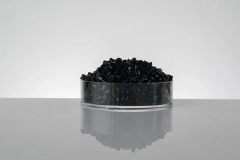
Given its remarkable properties, HTPA has found widespread use across various industries. Below are some of the key applications of high-temperature polyamide.
HTPA is used extensively in the automotive sector due to its heat resistance, chemical stability, and mechanical strength. Automotive components like engine parts, transmission gears, exhaust system components, and fuel system parts are often exposed to high temperatures and mechanical stress. HTPA ensures these parts maintain performance and durability under such conditions.
Automotive Applications | HTPA Benefits |
Engine components | Heat resistance, strength, durability |
Transmission gears | Low friction, high mechanical strength |
Exhaust system parts | Heat resistance, chemical stability |
Fuel system components | Chemical resistance, durability |
HTPA is used in electronics for insulating materials, circuit boards, connector housings, and insulating films. Its electrical insulation properties make it an essential component for high-voltage systems, electric vehicles, batteries, and electronics requiring heat resistance.
HTPA’s mechanical strength and dimensional stability also make it ideal for components that must perform reliably under high-stress conditions, such as high-performance connectors, power supplies, and motor windings.
In aerospace applications, the need for lightweight, high-performance materials is crucial. HTPA provides an optimal solution due to its mechanical strength, heat resistance, and dimensional stability. Common applications in aerospace include brake systems, fuel system components, engine parts, and thermal protection systems.
HTPA’s ability to withstand high temperatures and mechanical stress makes it ideal for industrial machinery components. Bearings, gears, valves, and bushings used in heavy machinery often operate in harsh environments that demand materials with high performance and durability. HTPA’s low friction and chemical resistance properties ensure efficient operation and longevity.
HTPA also has applications in the medical device industry, particularly in implantable devices, sterilization equipment, and medical tubing. Its biocompatibility, resistance to chemicals, and high mechanical strength make it suitable for critical applications in healthcare.
While HTPA offers many advantages, it’s important to consider how it compares to other materials used in similar applications, such as metals, ceramics, and composite materials.
Material | Strengths | Limitations | Best Use Cases |
High Temperature Polyamide (HTPA) | Heat resistance, chemical resistance, electrical insulation, low friction | Higher cost, limited load capacity | Automotive, aerospace, electronics, industrial machinery |
Metal Alloys | High load-bearing capacity, durability | Susceptible to corrosion, heavier | Structural components, machinery |
Ceramics | High temperature resistance, hardness | Fragility, brittle | Aerospace, electronic substrates, high-temperature seals |
Composite Materials | Lightweight, high strength, corrosion resistance | Cost, complex manufacturing | Automotive parts, aerospace, medical devices |
Versatility: Suitable for a wide range of industries, from automotive to aerospace and electronics.
Reliability: Offers high mechanical strength and dimensional stability in high-stress environments.
Safety: Excellent electrical insulation and chemical resistance for critical systems.
Cost-Effectiveness: In many applications, HTPA provides a cost-effective solution compared to metals or ceramics, particularly in lightweight and high-performance parts.
High-temperature polyamide (HTPA) is a groundbreaking material that continues to revolutionize industries requiring materials to perform under extreme conditions. Its heat resistance, mechanical strength, and chemical stability make it the material of choice for applications in automotive, aerospace, electronics, and industrial machinery. HTPA’s versatility and performance make it an essential component in the manufacturing of high-quality, durable products that can withstand the most demanding environments.
At Suzhou UNIKING New Material Co., Ltd., we specialize in providing HTPA solutions tailored to meet the demands of your specific applications. Whether you’re looking for high-performance materials for automotive parts, electrical insulation, or industrial machinery, we have the expertise and resources to deliver exceptional results. Contact us today to learn more about how our products can help enhance the performance and durability of your components.
Q: What is high-temperature polyamide (HTPA)?
A: High-temperature polyamide (HTPA) is a polymer designed to withstand high heat and mechanical stress. It offers heat resistance, chemical stability, and mechanical strength, making it ideal for industries like automotive, aerospace, and electronics.
Q: How does HTPA compare to metals and ceramics?
A: HTPA offers lightweight and cost-effective advantages over metals and ceramics. While metals and ceramics excel in load-bearing or hardness, HTPA provides a balance of heat resistance, chemical stability, and mechanical strength.
Q: What industries use HTPA?
A: HTPA is widely used in automotive, aerospace, electronics, medical devices, and industrial machinery. It is suitable for parts like engine components, electrical insulators, fuel system parts, and machine bearings.
Q: What are the main advantages of HTPA in automotive applications?
A: In the automotive industry, HTPA offers heat resistance, chemical stability, and mechanical strength, making it suitable for parts like engine components, transmission gears, and exhaust systems exposed to extreme conditions.