+86-512-52396378
sales@szuniking.com
sales@szuniking.com
1 Longteng Rd, Tonggang Industrial Park, Changshu ETDZ, Jiangsu Province, China 215511
Views: 0 Author: Site Editor Publish Time: 2026-07-24 Origin: Site


Is POM truly expensive, or does its performance justify the price? Polyoxymethylene plastic costs more than many common plastics. However, its strength, low friction, and dimensional stability can lower long-term costs. In this article, you will learn what affects POM prices, how grades compare, and how to estimate your project cost.
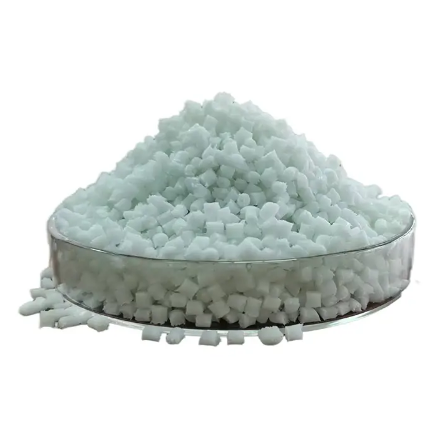
● Polyoxymethylene plastic is a mid-priced engineering material. It usually costs more than PP, PE, and many standard ABS grades.
● Bulk resin benchmarks differ by region. Actual quotations also depend on grade, order volume, delivery terms, color, and documentation.
● Toughened, weather-resistant, low-emission, high-flow, or glass-fiber-reinforced POM usually costs more than standard unfilled resin.
● POM pellets, extruded sheets, rods, machined parts, and molded components should not be compared through material price alone.
● Tooling, cycle time, scrap, inspection, freight, and packaging can exceed the resin cost within a finished component.
● A higher-priced grade may lower the cost per acceptable part through better processing, longer service life, or fewer failures.
Polyoxymethylene plastic does not have one fixed global price. Suppliers calculate quotations according to the resin grade, purchasing region, quantity, packaging, and delivery conditions.
Published market trackers reported bulk POM resin benchmarks of roughly $1.83 to $3.10 per kilogram across major regions in July 2026. These figures represent broad market references. They are not guaranteed prices for modified materials, smaller orders, or delivered products.
Region | Indicative Bulk Resin Price |
Northeast Asia | $1.84–$1.88/kg |
Southeast Asia | $1.83–$1.87/kg |
Middle East | $2.17–$2.21/kg |
North America | $2.91–$2.97/kg |
Europe | $3.04–$3.10/kg |
Note: These July 2026 figures require verification before publication or purchasing decisions.
Standard injection-molding resin is normally the lowest-cost POM option. It suits parts requiring good stiffness, wear resistance, and dimensional accuracy without advanced modification.
Large-volume buyers may purchase closer to regional market benchmarks. Smaller buyers often pay more because packaging, distribution, handling, and minimum order costs affect each kilogram.
POM copolymer and homopolymer can have different price levels. Their availability also varies between suppliers and regions.
Homopolymer may offer greater stiffness and strength in certain applications. Copolymer often provides good chemical resistance and thermal processing stability. The better option depends on the component, not only its purchase price.
Modified POM usually carries a price premium. Additives may improve toughness, weather resistance, flow, low-temperature behavior, emissions, friction, or wear performance.
These changes require extra raw materials, formulation work, compounding control, and testing. Buyers should therefore expect a specialized grade to cost more than general-purpose resin.
Glass-fiber-reinforced POM generally costs more than unfilled POM. The reinforcement adds material and compounding costs. It can also require tighter processing control.
However, reinforced material offers greater stiffness, strength, and dimensional control. It may create value in structural parts, gears, bearings, and components exposed to mechanical loads.
Pellets are raw materials for molding or extrusion. Sheets and rods have already passed through an additional manufacturing stage.
Their prices include extrusion, stock holding, cutting, quality control, and distribution. A kilogram of POM sheet may therefore cost much more than a kilogram of resin pellets.
Machined blanks may cost even more because suppliers must include cutting waste and labor.
A trial order may have a high cost per kilogram. Fixed expenses must be divided across a limited amount of material.
Larger orders can offer better pricing through efficient production, full packaging units, and scheduled shipping. Annual purchasing agreements may also improve price stability.
Tip: Request prices for trial, regular, and annual volumes to see how order size changes the unit cost.
The base resin price is only one part of the quotation. Material consistency, additives, customization, and testing can significantly change the final cost.
Precision parts need stable melt flow, shrinkage, strength, and color. Poor consistency may cause incomplete filling, dimensional variation, or rejected components.
Reliable production requires raw-material inspection and process monitoring. This quality control raises supplier costs but can reduce losses during molding.
Impact modifiers improve toughness. Stabilizers may protect parts from heat, light, or outdoor exposure. Lubricants can support sliding performance, while glass fibers increase stiffness.
Each additive changes the formulation. It may also require new processing settings and validation tests.
Automotive, electrical, medical, and industrial projects may require detailed material records. Buyers can request mechanical data, emission tests, environmental documents, and batch traceability.
These services add value, but they also increase development and quality-control expenses.
Standard natural or black materials are often easier to supply. Custom colors require pigments, matching trials, and production cleaning.
A customized formulation may also need several development rounds. Low annual volume makes these fixed costs more noticeable.
The cheapest grade may not be the right grade. A material should match the real operating environment and manufacturing process.
Standard POM is suitable for many gears, rollers, bushings, fasteners, and sliding parts. It provides a useful balance between cost and mechanical performance.
It is often the most economical option when the part does not face severe impact, sunlight, cold, or emission limits.
High-flow material can fill thin walls or complex mold sections more easily. Weather resistance supports components exposed to light or changing environmental conditions.
The resin may cost more, but better mold filling can reduce short shots and processing pressure. It may also support shorter cycles.
Standard POM can become less impact-resistant under demanding conditions. Toughened grades help parts resist cracking, shock, and repeated assembly forces.
Low-temperature formulations are useful for clips, fasteners, and outdoor components. Their higher price may prevent failures during cold storage or winter use.
Low-emission POM is designed for applications where odor or volatile emissions must be controlled. It may require special formulation and extra validation.
Reinforced POM targets stiffness and load resistance instead. Buyers should not pay for both features unless the component needs them.
Note: Describe the actual failure risk before selecting a premium POM grade.
POM normally costs more than commodity plastics. However, raw material price does not show whether another plastic can meet the same requirements.
Material Comparison | Typical Cost Position | Main Purchasing Question |
POM vs. PP | POM is usually higher | Does the part need greater wear resistance and accuracy? |
POM vs. ABS | POM is often higher | Is low friction or repeated movement important? |
POM vs. nylon | Prices may overlap | Will moisture affect dimensions or performance? |
POM vs. specialty plastics | POM is often lower | Does the part require extreme heat resistance? |
POM vs. metal | Resin may cost less | Can molding replace machining and assembly? |
PP is economical, lightweight, and chemically resistant. ABS offers good appearance and impact performance. Both can be cheaper than POM.
POM becomes more valuable when parts need low friction, wear resistance, stiffness, or repeatable dimensions. Examples include gears, latches, rollers, and moving mechanisms.
Nylon offers strength, toughness, and wear resistance. However, many nylon grades absorb more moisture than POM.
Moisture can change part dimensions and mechanical behavior. POM may justify a higher price when dimensional stability is critical.
High-temperature engineering plastics can cost much more than POM. They are useful when parts face extreme heat, chemicals, or electrical demands.
POM can be more economical when those advanced properties are unnecessary.
Metal may provide greater strength, but it can require machining, lubrication, corrosion protection, and assembly.
Injection-molded POM can combine several features within one part. It can also reduce weight and eliminate secondary operations. The resulting unit cost may be lower at suitable production volumes.
A resin quotation cannot reveal the complete component cost. Finished parts include material, tooling, processing, labor, inspection, and logistics.
Start with the finished part weight. Then add runners, gates, startup waste, rejected parts, and retained samples.
A 20-gram component does not always consume only 20 grams of resin. The real consumption depends on the mold and production process.
Tooling cost changes according to cavity count, precision, surface finish, slides, inserts, and expected service life.
A prototype mold spreads its cost across fewer parts. A production mold costs more initially but may deliver a lower unit cost over a large order.
Machine size, cycle time, cooling, automation, and defect rates affect every component. A cheaper resin may flow poorly or create unstable dimensions.
A higher-flow grade can sometimes improve mold filling and productivity. Its higher material price may be recovered through efficient production.
Machining avoids injection-mold tooling. It works well for prototypes, replacement parts, and low-volume orders.
However, the process removes material and requires skilled labor. Complex shapes may create significant waste, making machining expensive at larger volumes.
A practical estimate should separate one-time costs from recurring costs.
Use this basic calculation:
Annual material cost = material price × material used per cycle × annual cycles
Material used per cycle should include the parts, runners, startup scrap, and expected rejection rate.
Include mold development, machine time, setup, labor, maintenance, and process validation. Divide tooling costs by the expected production volume.
This step gives a more realistic cost per part.
Testing may include dimensional inspection, mechanical checks, color approval, or emission evaluation. Logistics may include freight, insurance, duties, and local delivery.
Inventory also carries costs. Buyers may need safety stock when lead times are long.
The lowest unit price can become expensive after failures. Include replacement frequency, downtime, lubrication, warranty claims, and assembly labor.
A durable POM component may produce a lower lifecycle cost than a cheaper alternative.
Cost reduction should protect performance. Removing a necessary property can create larger losses later.
Define the actual load, temperature, impact, wear, chemical, and weather conditions. Do not select a premium grade because its data sheet appears stronger.
Use standard POM when standard performance is enough.
Consistent wall thickness improves molding. Draft angles support easy release, while radii reduce stress concentration.
Removing unnecessary material can lower part weight and cycle time. Practical tolerances also reduce tooling and inspection costs.
Combine small orders where possible. Share annual forecasts and expected delivery schedules with the supplier.
Better planning may reduce small-batch premiums, emergency shipping, and material shortages.
Test samples under real operating conditions. Confirm mold filling, dimensions, assembly, impact, and wear behavior.
Early testing helps prevent expensive material changes after tooling is complete.
Tip: Compare suppliers through cost per accepted component, not price per kilogram alone.
A detailed request helps suppliers recommend the correct grade and provide a useful quotation.
Provide the operating temperature, mechanical load, movement, chemical exposure, and expected service life. State whether the part will be used indoors or outdoors.
Include dimensional requirements and known failure risks.
Clarify whether you need standard, toughened, low-temperature, weather-resistant, low-emission, or reinforced POM.
Also state the required color, environmental documents, testing standards, and traceability level.
Provide the trial quantity, order quantity, annual demand, packaging preference, and delivery destination.
Ask whether freight, duties, and local charges are included.
Request technical data, processing recommendations, sample terms, lead time, payment conditions, and quotation validity.
Raw-material prices can change. A quote should therefore include its valid period and agreed delivery terms.
Polyoxymethylene plastic costs more than many basic plastics, yet it can lower total production costs. Grade, volume, processing, tooling, and logistics all affect its real price. UNIKING supplies high-flow, toughened, low-temperature, low-emission, and reinforced POM solutions. Its material support helps buyers balance performance, processing efficiency, and long-term value.
A: Polyoxymethylene plastic is moderately priced among engineering plastics but costs more than commodity plastics.
A: Special additives, reinforcement, testing, color, low volume, and delivery requirements raise polyoxymethylene plastic costs.
A: Yes. Glass fibers add material, processing, and quality-control costs.
A: Select only necessary properties, simplify part design, and consolidate purchasing volume.
A: Polyoxymethylene plastic can be cheaper when molding replaces machining, lubrication, or assembly.
A: Grade, quantity, location, packaging, documents, and delivery terms differ between projects.